Climbing Ropes 101
-Overview of Different Types of Climbing Ropes-
Climbing ropes are essential for safety in various climbing activities. They are designed to handle falls, provide support, and withstand environmental conditions. The main types of climbing ropes are categorized by their stretch, diameter, and intended use.
1. Dynamic Ropes (Stretchable for Fall Absorption)
Single Ropes:
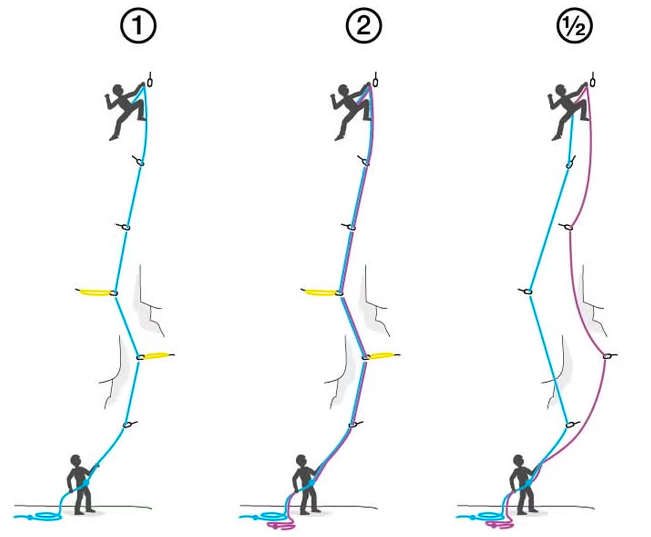
UIAA Marking: A circled "1" at the end of the rope or on the manufacturer's label.
Best for: Sport climbing, trad climbing, and general climbing.
Features: Used alone, lightweight, and easy to handle.
Diameter: 8.5mm – 11mm.
Weight: Heavier than half or twin ropes, usually 50-80g per meter.
Sheath Construction: Thicker and more robust to handle repeated falls and abrasion.
Half Ropes:
UIAA Marking: A circled "½" at the rope ends or label.
Best for: Multi-pitch trad climbing, ice climbing, and alpine routes.
Features: Used in pairs, reducing rope drag on wandering routes.
Diameter: 8mm – 9mm.
Weight: Lighter than single ropes, around 40-55g per meter.
Sheath Construction: Slightly thinner than single ropes but still durable.
Twin Ropes:
UIAA Marking: A circled "∞" (infinity symbol) at the rope ends or label.
Best for: Ice climbing and alpine climbing.
Features: Used in pairs but clipped together into the same protection point.
Diameter: 7mm – 8.5mm.
Weight: 35-45g per meter (lightest option).
Sheath Construction: Very thin, optimized for weight savings and flexibility.
________________________________________________
-Things to Consider When Buying a Climbing Rope-
Choosing the right climbing rope is essential for safety and performance. Here are key factors to consider:
1. Rope Type
Dynamic Ropes: Designed to stretch and absorb impact, making them ideal for lead climbing.
Static Ropes: Minimal stretch, used for rappelling, rescue, and hauling but not for lead climbing.
2. Diameter and Weight
Thinner Ropes (8mm – 9.5mm): Lightweight, best for multi-pitch climbs and alpine routes but wear out faster.
Medium Ropes (9.5mm – 10mm): Good balance of durability and weight for sport and trad climbing.
Thicker Ropes (10mm – 11mm): More durable, suited for heavy use like top-roping and gym climbing.
3. Length
30m – 40m: Indoor climbing and short routes.
50m – 60m: Standard for most outdoor sport and trad climbing.
70m – 80m: Useful for long pitches and extended routes.
4. Rope Treatment
Dry-Treated Ropes: Water-resistant, ideal for ice climbing and alpine conditions.
Non-Dry Ropes: More affordable, best for indoor and dry outdoor climbing.
5. Safety Ratings
Look for UIAA and EN certification to ensure the rope meets safety standards.
Consider the fall rating (higher ratings indicate greater durability).
6. Handling and Durability
Softer ropes are easier to handle and tie knots with.
Stiffer ropes are more durable but may be harder to manage.
________________________________________________
-Final Thoughts on Ropes-
When choosing a climbing rope, it's crucial to balance durability, weight, and performance based on your climbing style and environment. A thinner rope may be ideal for long, technical routes but will wear out faster, while a thicker rope offers longevity for frequent use. Consider whether you need a dry-treated rope for wet conditions or a standard rope for indoor or dry rock climbing. Length is also key—ensure your rope is long enough for the routes you plan to climb. Lastly, always check for UIAA and EN safety certifications to ensure reliability. Selecting the right rope enhances both safety and efficiency, making every climb smoother and more enjoyable.