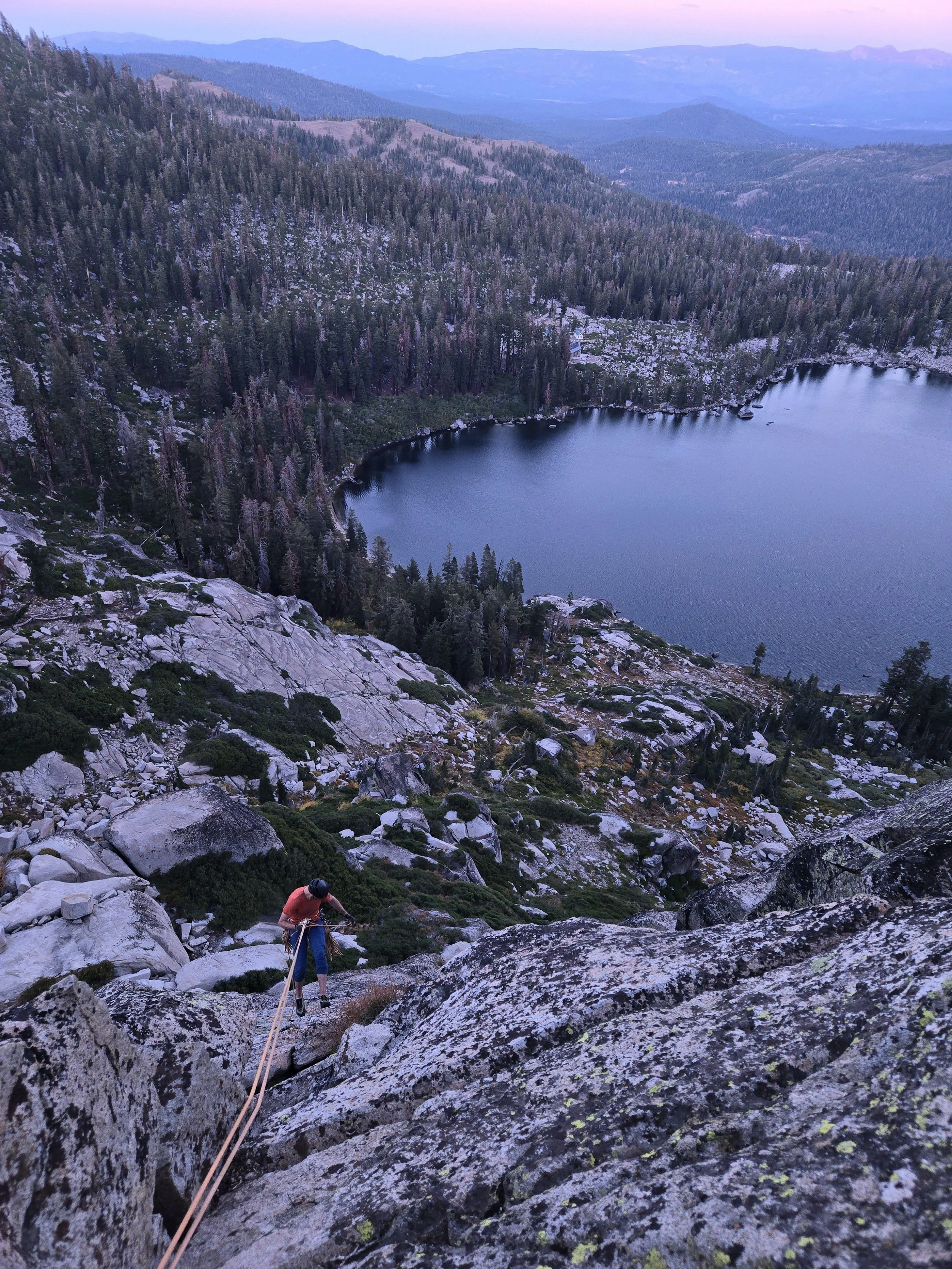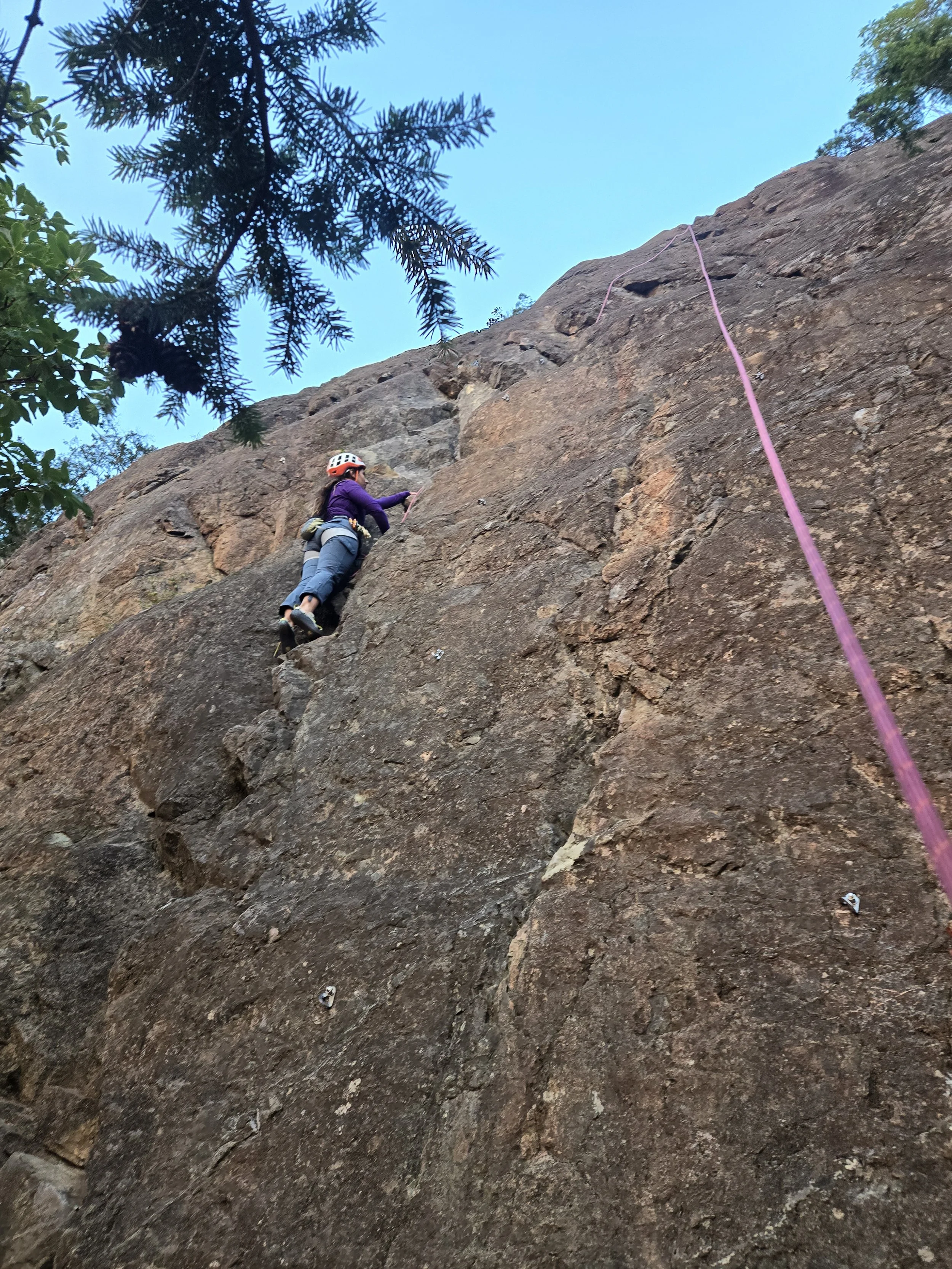
This introductory level rock climbing anchor course is designed for climbers who wish to improve their skills in creating and evaluating climbing anchors for both single- and multi-pitch routes. Participants will engage in hands-on learning, focusing on the essential principles required to build safe and effective anchors.
This course is suitable for intermediate climbers who have basic climbing experience and seek to enhance their anchor-building knowledge and skills. It is ideal for anyone looking to take their climbing to the next level, whether for personal achievement or to prepare for guiding others.
Rock Anchor Clinic
Prices: $200.00 per person
Dates: Plenty of spots available! Please email or call our office for available dates.
-
Goals:
Understanding Anchor Fundamentals
Participants will learn the basic principles of climbing anchors, including the various types used in different scenarios (e.g., natural vs. artificial anchors).Safety Protocols
The clinic aims to emphasize the importance of safety measures when constructing and assessing anchors, ensuring climbers can confidently manage risks.Practical Skills Development
Climbers will gain hands-on experience in building and evaluating anchors using appropriate knots, hardware, and techniques.Critical Thinking in Anchor Placement
Participants will develop decision-making skills for selecting optimal anchor locations and configurations based on environmental variables.
Outcomes:
Enhanced Anchor Skills
Participants will leave with the ability to construct a variety of secure anchors in both natural and artificial settings.Increased Safety Awareness
Climbers will be more attuned to safety practices, making informed judgments about anchor integrity and risk management in climbing situations.Improved Problem-Solving Abilities
Climbers will enhance their situational awareness and problem-solving skills, equipping them to handle common challenges associated with anchor placement.Confidence in Multi-Pitch Climbing
Participants will feel more assured in their ability to lead or assist in multi-pitch climbs, understanding how to effectively manage anchor systems over varying terrains.Community Building
The clinic fosters a sense of camaraderie among participants, encouraging a supportive network of climbers committed to safety and skill development.
Note: A well-structured rock climbing anchor clinic will provide climbers with the critical knowledge and skills necessary to enhance their climbing proficiency while prioritizing safety and community engagement.
-
8:00am - Meet your guide at the crag parking lot. Go through gear check & review the plan for the day.
8:30am - Begin learning & hands on practice
Noon - Lunch at the crag
4:00pm - Finish the day back at trailhead, debrief the day and say our goodbyes.
-
Basic Climbing Knowledge: Participants must have a foundational understanding of climbing terminology, equipment, and techniques. Familiarity with rock climbing principles is essential.
Climbing Experience: A minimum of 10 outdoor climbing days or equivalent indoor climbing experience is necessary. Participants should be comfortable climbing at least to a grade of 5.6 or the equivalent.
Belaying Proficiency: Participants should be competent in belaying techniques and practices. This includes understanding proper rope handling and communication with climbing partners.
Physical Fitness: A moderate level of physical fitness is required to safely participate in the clinic, including the ability to perform basic climbing movements and maneuvers.
Note: By ensuring that all participants meet these prerequisites, we can foster a productive learning environment in the rock climbing anchor clinic.
-
Incuded:
Friendly AMGA trained guides
Recreational use permits
Group gear, first aid, satellite communication device.
Wag Bags (Waste Disposal Bags)
Ropes
Rock Protection
Not Included:
Harness, helmets, carabiners, climbing shoes.
Food
Transportation
Guide Gratuities
1 Day Rock Anchor Clinic Curriculum
Morning
Welcome & Orientation: safety briefing, course objectives, anchor use contexts.
Anchor Theory:
SERENE / ERNEST principles (Solid, Equalized, Redundant, Efficient, No Extension / No Slack, Timely).
Forces on anchors: downward, outward, and multidirectional.
Gear options for anchor building (cams, nuts, bolts, natural features, slings, cordelette).
Ground School Practice:
Hands-on practice building anchors at ground level.
Sliding X, quad, cordelette methods.
Group critique of anchor systems.
Afternoon
Real-Rock Anchor Applications:
Building anchors on live climbs (top of single-pitch routes).
Anchors off bolts, cracks, and trees.
Redundancy & extension considerations in different terrain.
Evaluating bad rock, marginal placements and what not to trust.
Wrap-Up:
Anchor evaluation checklist.
Review common errors & safe practices.
Next steps for students: mentorship, multi-pitch anchor systems, advanced rescue courses.