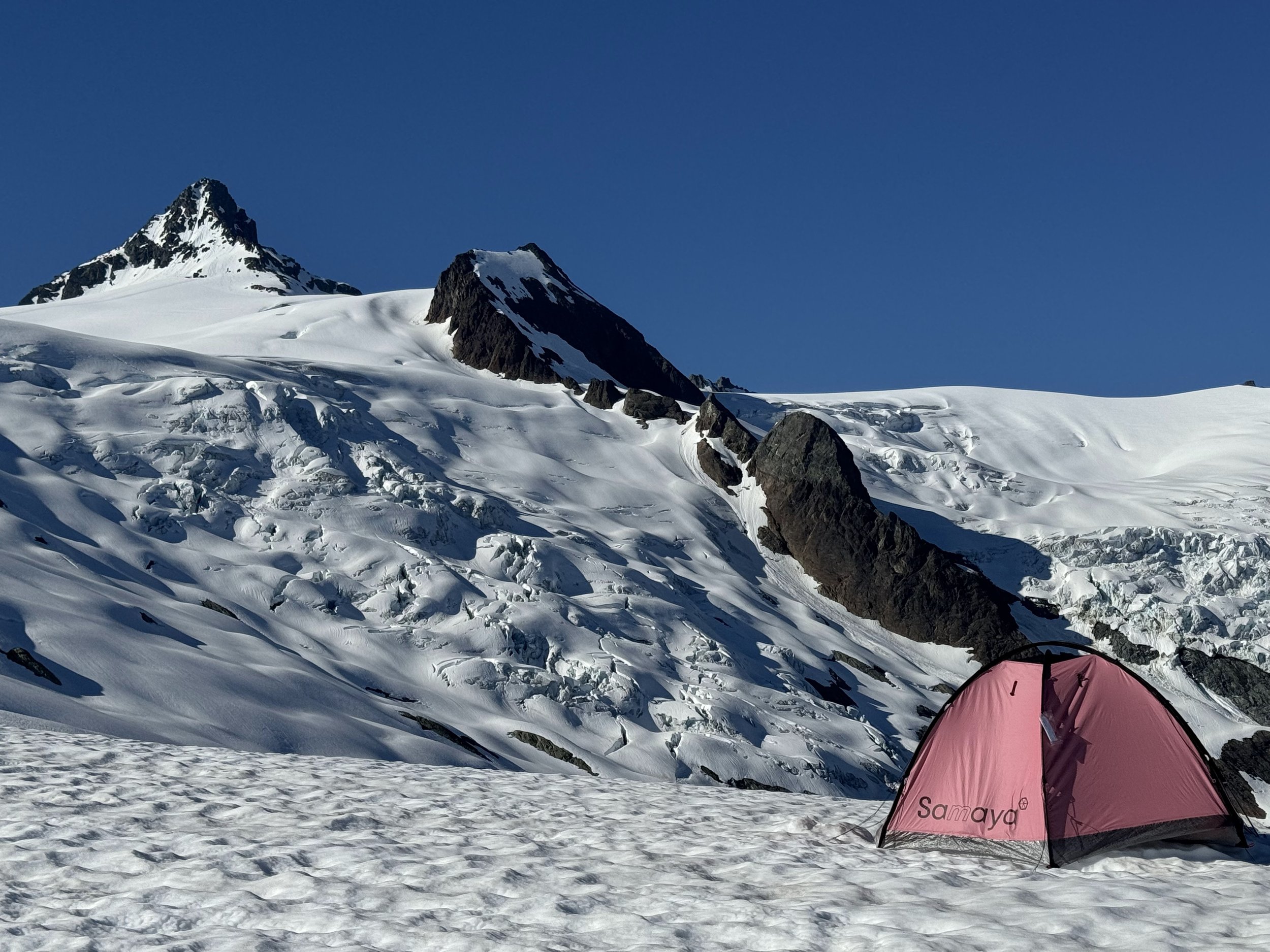
Our 2-Day Crevasse Rescue Fundamentals course is designed for skiers, splitboarders, and climbers who want to build a strong foundation in glacier travel safety and develop the confidence to practice crevasse rescue systems on their own. Over two immersive days, we break down the rescue process into clear, concrete steps and teach multiple methods for anchoring, hauling, and rope ascension—so students not only learn the “standard” approach, but also gain the flexibility to adapt to different scenarios.
Training locations vary depending on conditions and logistics. We may work on an actual glacier or alpine environment, or use accessible venues like a snowbank, hillside, or even a city park to maximize repetition and hands-on learning. The two-day format allows for deeper practice, troubleshooting, and scenario-based exercises, giving participants more opportunities to refine technique and ask questions than a single-day course can provide.
By the end of the course, you will have built anchors, set up hauling systems, and executed partner rescue scenarios multiple times, leaving you with both the knowledge and the muscle memory to continue practicing independently.
2 Day Crevasse Rescue
Price: $485.00
Dates:
-
Goals
Knowledge Acquisition: Participants will gain a comprehensive understanding of glacier terrain and crevasse formation. This includes recognizing hazards and identifying safe travel routes.
Skill Development: The course aims to develop practical skills in crevasse rescue techniques, including self-rescue and partner rescue methods. This involves hands-on training in knot tying, anchor construction, and the use of rescue equipment.
Teamwork and Communication: Emphasis will be placed on practicing efficient communication and teamwork during rescue scenarios. Participants will learn to work collaboratively under pressure, as effective coordination is crucial in emergency situations.
Safety Awareness: The course will instill a strong foundation of safety protocols related to glacier travel. Participants will learn how to minimize risks and make informed decisions while navigating glaciated terrains.
Outcomes
Proficiency in Rescue Techniques: Upon completion, participants will be proficient in various crevasse rescue methods, equipped to handle both self-rescue and partner rescue situations effectively.
Increased Confidence: Individuals will leave the course with increased confidence in their ability to respond to emergencies, which can enhance their decision-making skills on the mountain.
Preparedness for Real-World Situations: Participants will be better prepared for real-world challenges, having engaged in scenario-based training that simulates the conditions and pressures of an actual rescue.
Enhanced Group Dynamics: Participants will have improved skills in team dynamics, understanding the importance of roles, communication, and support in high-stress situations.
-
Day 1: Introduction to Crevasse Rescue Techniques
Morning Session
8:00am - 8:30am:
Meet your guide at designated trail head, introductions and go over the plan for the day.8:30am - 10:00am:
Overview of crevasse formations, hazards, and rescue equipment. Discussion of safety protocols and risk assessment.10:00am - 12:00pm: Equipment Overview
Hands-on examination of essential gear including ropes, harnesses, pulleys, and protraction systems.
Lunch Break
12:00pm - 12:30pm: Lunch in the field. Refuel for the second half of the day.
1:00pm - 2:30pm: Snow Anchor Techniques
Practical session on constructing snow anchors and practical applications of different anchor types.2:30pm - 3:00pm: Your Guide will demo a full crevasse rescue drill.
3:00pm - 4:30pm:
Participants will practice fundamental rescue techniques on a simulated crevasse environment for the rest of the day.4:45pm: Back to trail head. We will to a light debrief of the day and Instructors will go over the plan for day 2.
Day 2: Crevasse Rescue Techniques Scenarios.
Morning Session
8:00am - 9:00am: Recap of Day 1:
Review key concepts and techniques learned, addressing any lingering questions.9:00am - 11:00am: Rescue Scenarios:
Detailed instruction on rescue techniques..11:00am - 12:30pm: Simulation Exercises
Participants will apply advanced skills in realistic rescue scenarios under instructor supervision.12:30pm - 1:00pm: Lunch in the field. Refuel for the second half of the day.
1:00pm - 3:00pm: Team Rescue Techniques:
Group exercises and coordinating rescues on a multi person rope team.3:00pm - 4:30pm: Final Scenario Comprehensive: Capstone exercise where participants demonstrate their acquired skills. Instructors will provide feedback.
4:30pm - 5:00pm: Course Conclusion
Review of key learnings, distribution and final Q&A. Participants will have an opportunity to network.5:00pm: End of Course
Participants depart with newfound skills and knowledge in crevasse rescue.
-
This is a beginner mountaineering course. No prior mountaineering experience required. Arrive with a open mind and prepare to use your brain & problem solving skills!
Solid fitness level: Even through we are based in one area for a majority of the course, we will be doing a lot of physical work the entire day.
Basic knowledge of knots: It helps to have a basic understanding of knots and hitches prior to the start of the course.
Note: Upon registration for this program, you will receive a small list of recourses to get you on board with the hitches & knots we will use throughout the course.
-
Included:
Friendly AMGA trained guides
Applicible recreation & forest service permits
Ropes, snow protection, group training gear
Group first aid & GPS communication devices
Waste Disposal bags in compliance with Leave “No Trace Principles”
Not included:
Crampons, ice axe, harness, carabiners
Beacon, Probe, Shovel
Food & Snacks
Transportation
Guide Gratuities
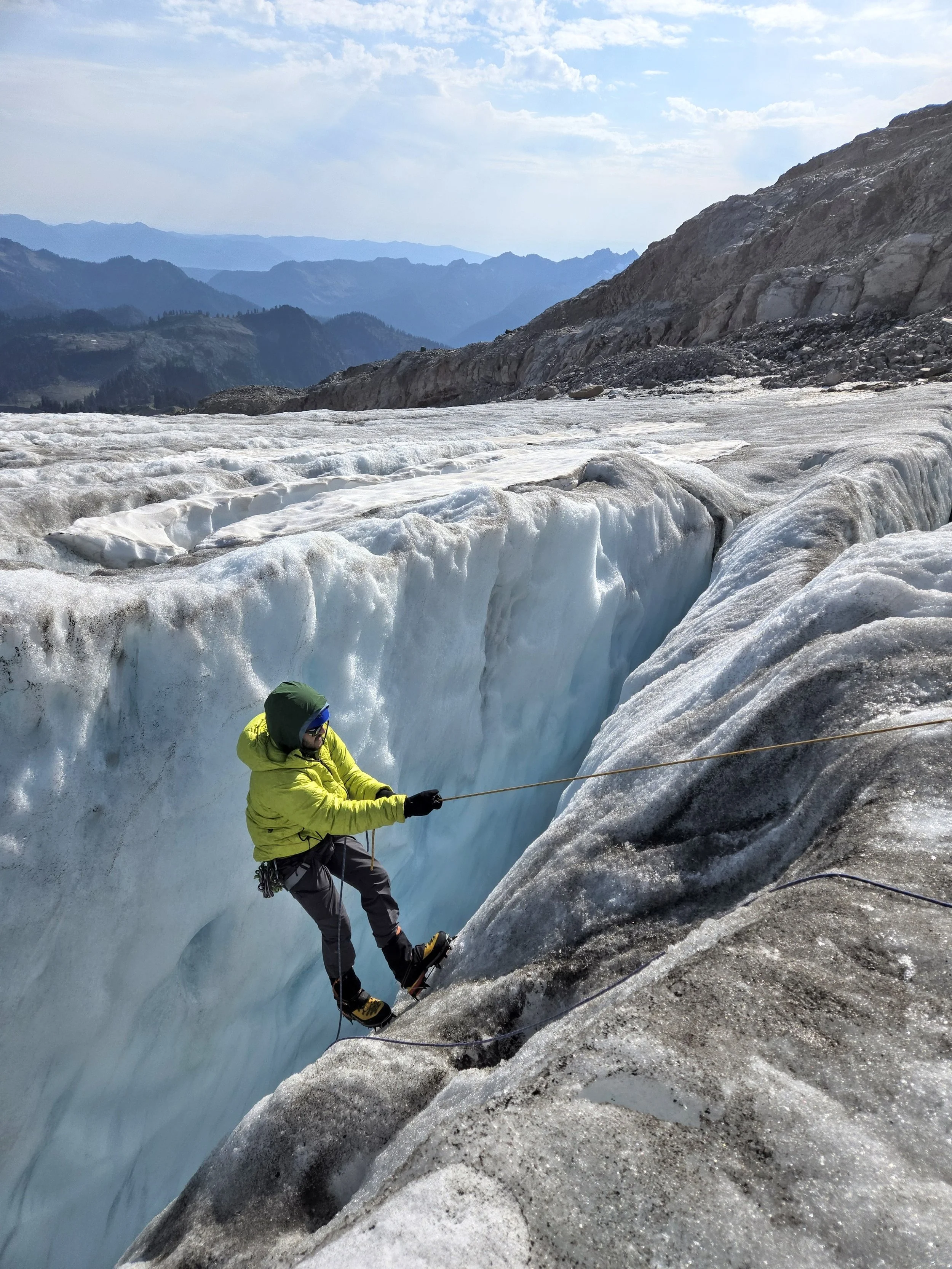
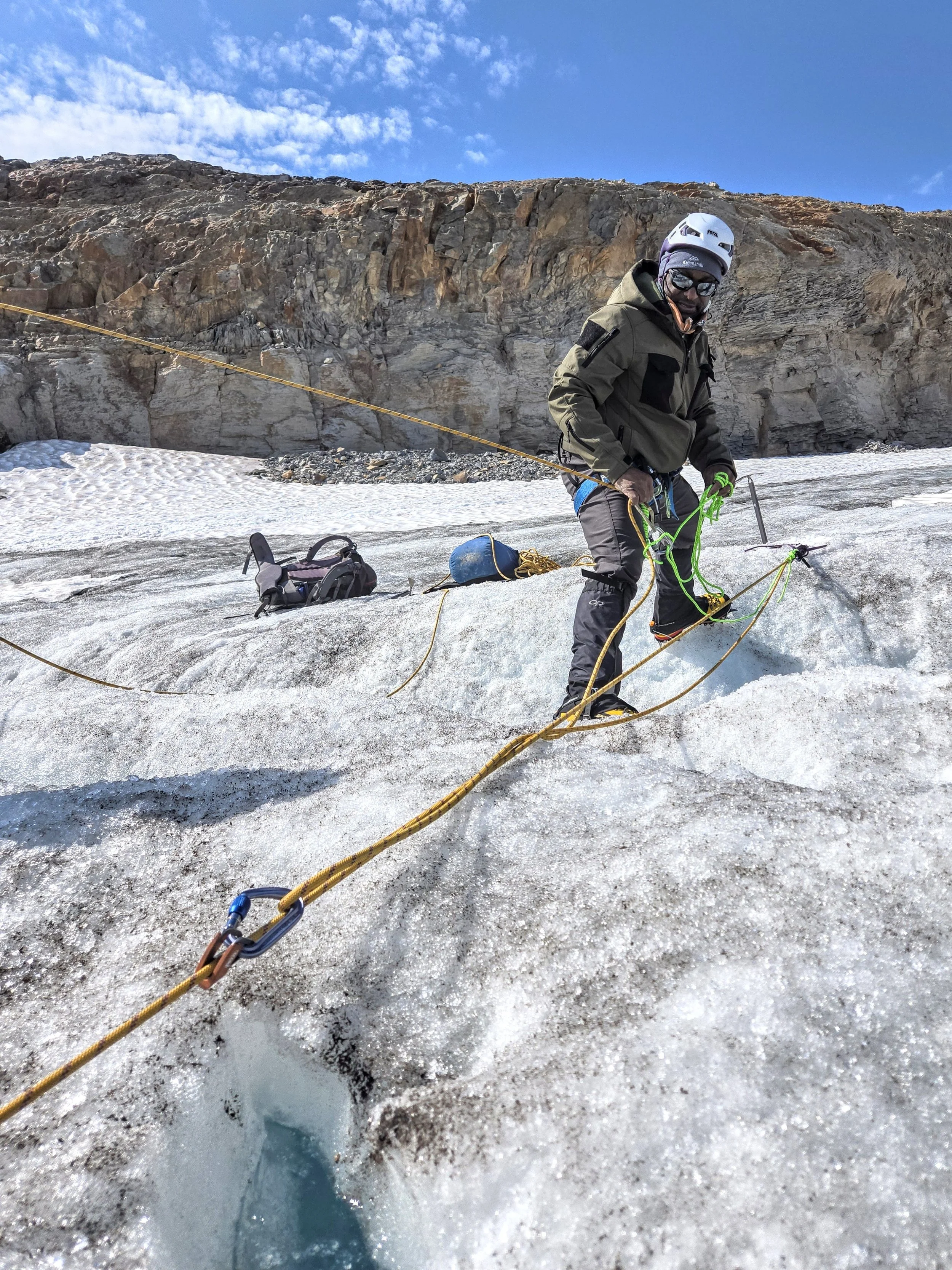
Day 1 – Fundamentals & Systems
Glacier hazard overview: fall scenarios and rescue priorities
Essential knots & hitches: clove hitch, prusik, klemheist, autoblock, figure-8, overhand, alpine butterfly, etc.
Rope handling & management: coils, flaking, organization in the field
Anchor review & construction (snow pickets, skis, packs, ice axe, or improvised anchors in a park/lot setting
Basic hauling systems: drop loop, 3:1 Z-pulley, 6:1 haul
Rope capture progression with different techniques & mechanical devices
Load transfer: securing the fallen climber to the anchor
Rotating stations: build and test multiple hauling systems
Controlled rescue simulations: rescuing a “fallen partner” from slope/snowbank mockups
Troubleshooting common mistakes (slippage, poor anchor setup, rope tangle)
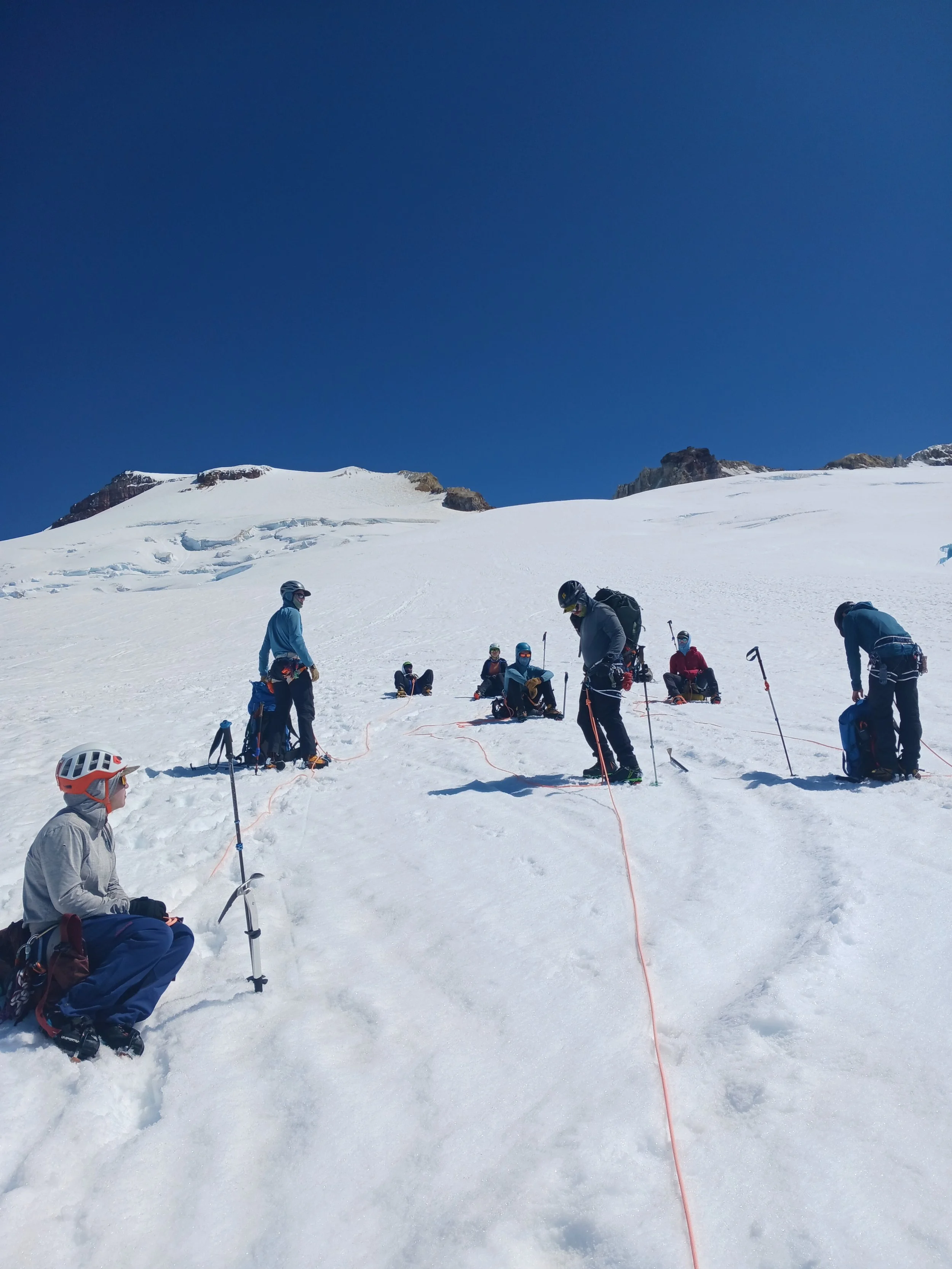
Day 2 – Application & Scenarios
Ascending the rope with prusiks or mechanical devices
Solo rescue considerations vs. team rescue dynamics
Team-based rescue drills: communication, coordination, efficiency
Full rescue scenarios from fall to haul-out
Improvised anchors
Student teams take lead in complete rescue simulations under guide supervision
Feedback on efficiency, safety, and communication
Group debrief: review key takeaways, limitations of practice venues vs. real glacier environments
Final Q&A and recommendations for continued practice/progression