Overview of Mountain Boots
Mountaineering Boots
Mountaineering boots are essential gear for climbers tackling rugged terrain, extreme weather, and high-altitude conditions. Unlike regular hiking boots, they offer enhanced support, insulation, and compatibility with crampons for traversing snow, ice, and rock. The right pair can mean the difference between a safe, efficient climb and a dangerous struggle. Whether scaling icy peaks, crossing glaciers, or navigating mixed terrain, choosing the right mountaineering boots depends on the difficulty of the climb, temperature, and level of technicality required.
Types of Mountaineering Boots
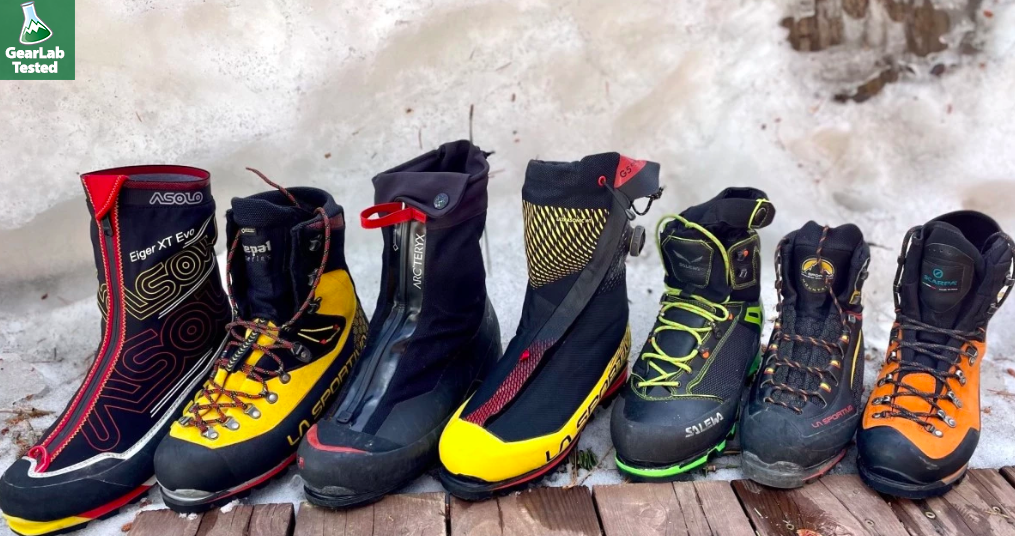
Mountaineering boots come in various types, each designed for specific conditions and climbing objectives. Lightweight boots are ideal for moderate alpine routes, while heavily insulated expedition boots are necessary for extreme cold and high-altitude ascents. Some feature rigid soles for precise footing on ice, while others offer flexibility for mixed terrain. Crampon compatibility also varies, with some boots designed for strap-on crampons and others built for fully automatic systems. Understanding these differences helps climbers choose the right boots for safety, comfort, and performance in challenging environments. Mountaineering boots are designed to provide support, insulation, and durability for climbing and hiking in extreme conditions. They vary in stiffness, insulation, and compatibility with crampons. Here are the main types:
1. Approach Shoes
Best for: Approaches, moderate rock climbing, and mixed terrain.
Features: Flexible soles, rock climbing soles, and water-resistant materials.
Crampon Compatibility: Not compatible with crampons. Micro-spikes are the closet option for added traction
2. Single Mountaineering Boots
Best for: General alpine climbing, ice climbing, and glacier travel.
Features: Stiff soles, moderate insulation, and waterproofing.
Crampon Compatibility: Designed for semi-automatic or automatic crampons.
3. Double Mountaineering Boots
Best for: High-altitude climbing and extreme cold conditions.
Features: A removable insulated liner for warmth and quicker drying.
Crampon Compatibility: Compatible with automatic crampons for technical climbing.
4. Expedition Boots
Best for: 6,000m+ peaks, polar expeditions, and extreme cold environments.
Features: Extra insulation, triple-layer construction, and a gaiter for protection.
Crampon Compatibility: Fully compatible with automatic crampons for extreme conditions.
5. Ice Climbing Boots
Best for: Technical ice climbing and mixed rock/ice routes.
Features: Rigid soles, aggressive fit, and lightweight materials.
Crampon Compatibility: Optimized for automatic crampons for precision climbing.