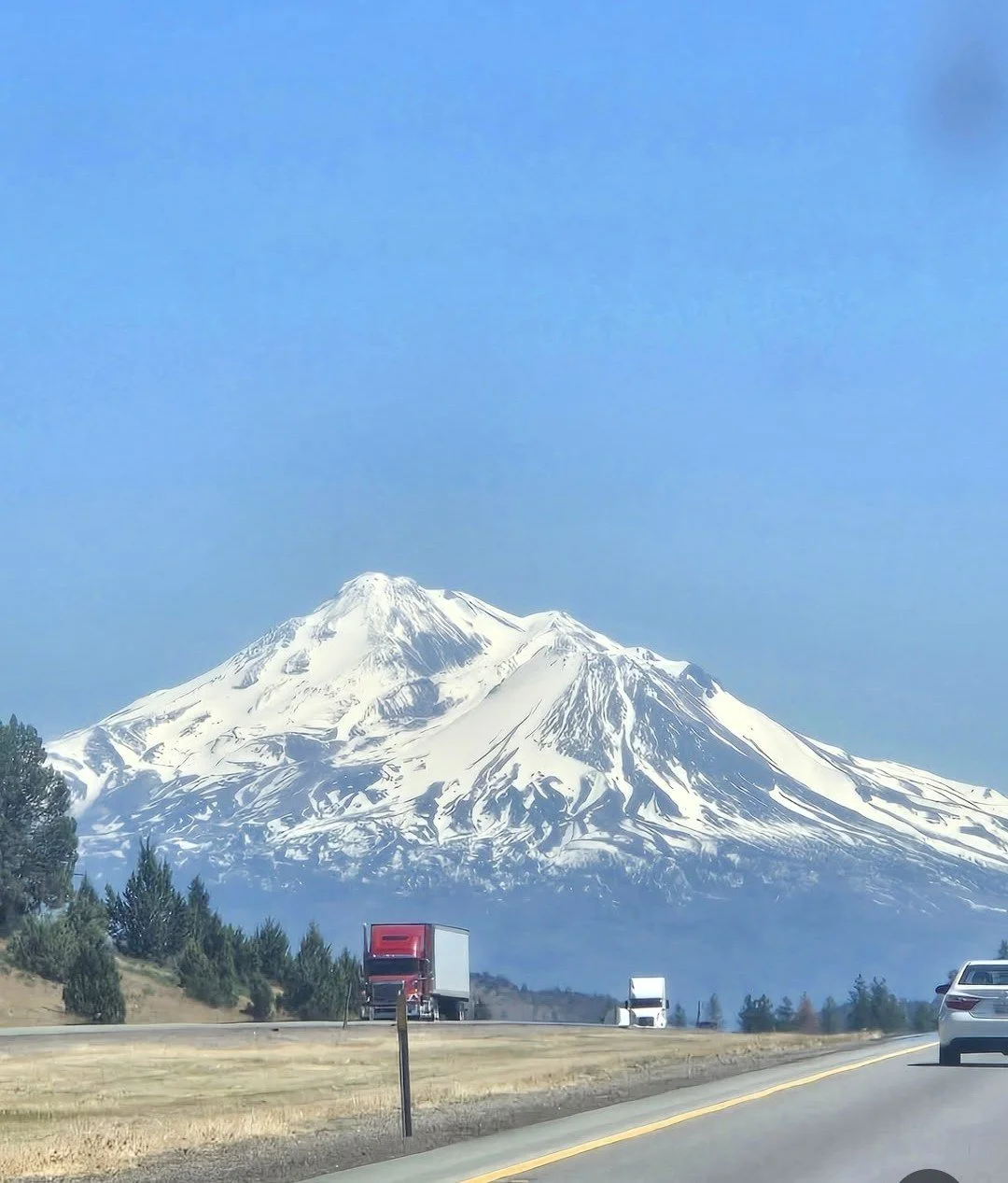
Mount Shasta Ski Descent
3 Day Mount Shasta Ski Descent
A ski descent of Mount Shasta is one of the most iconic ski mountaineering objectives in California. A high elevation journey that blends endurance, skill, and reward in perfect balance. Standing at 14,179 feet, Mount Shasta offers over 7,000 vertical feet of continuous skiing from summit to valley, making it one of the most sought-after ski descents in North America.
This program is designed for experienced backcountry skiers and splitboarders who are ready to take their mountain travel into glaciated, high-altitude terrain. Over three days, you’ll ascend and ski one of Shasta’s classic routes, such as Avalanche Gulch, Hotlum-Wintun Ridge, or West Face Gully — while refining advanced uphill movement, cramponing, and ski mountaineering techniques under the mentorship of professional guides.
Price: $750.00
Date:
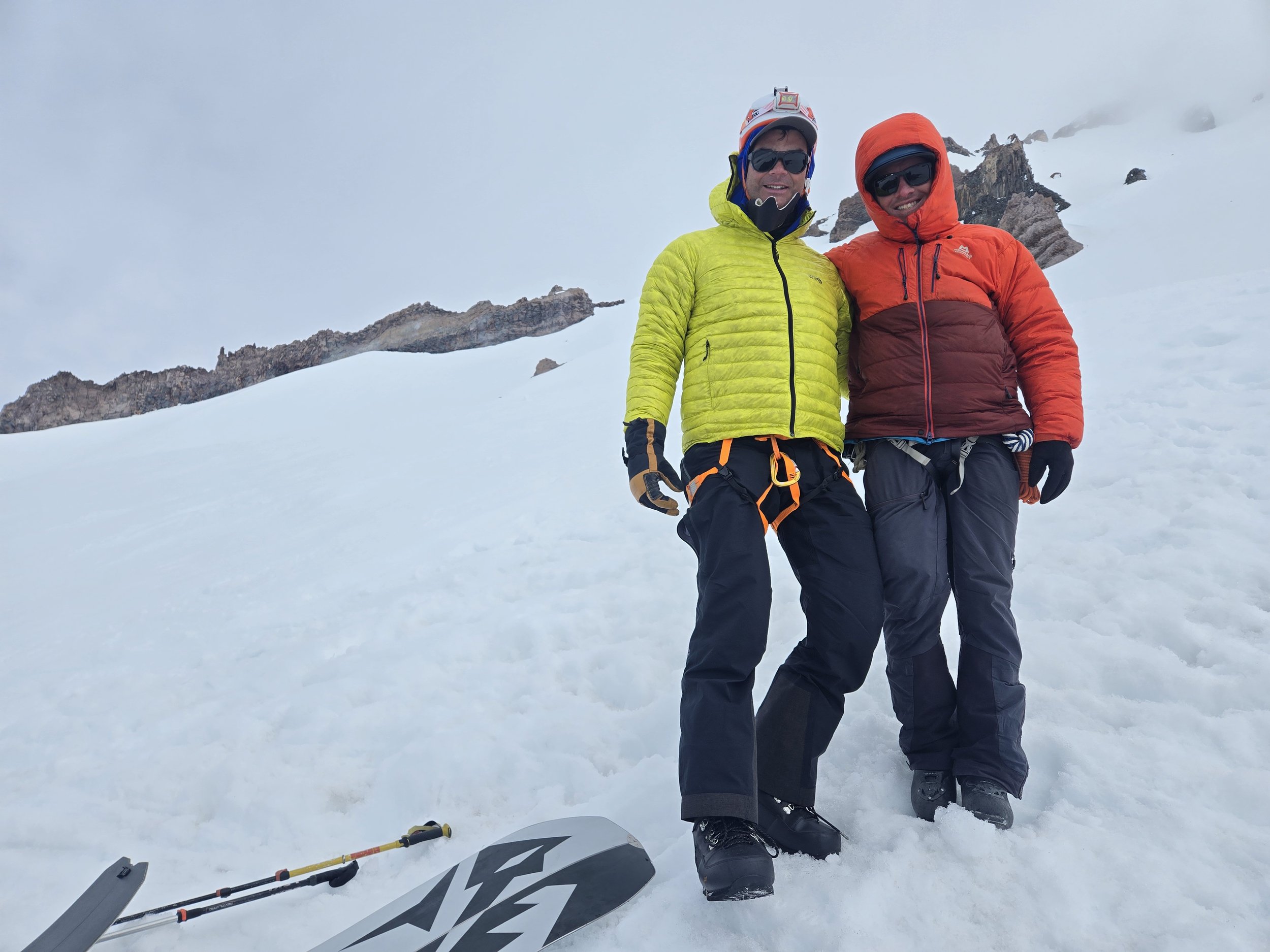
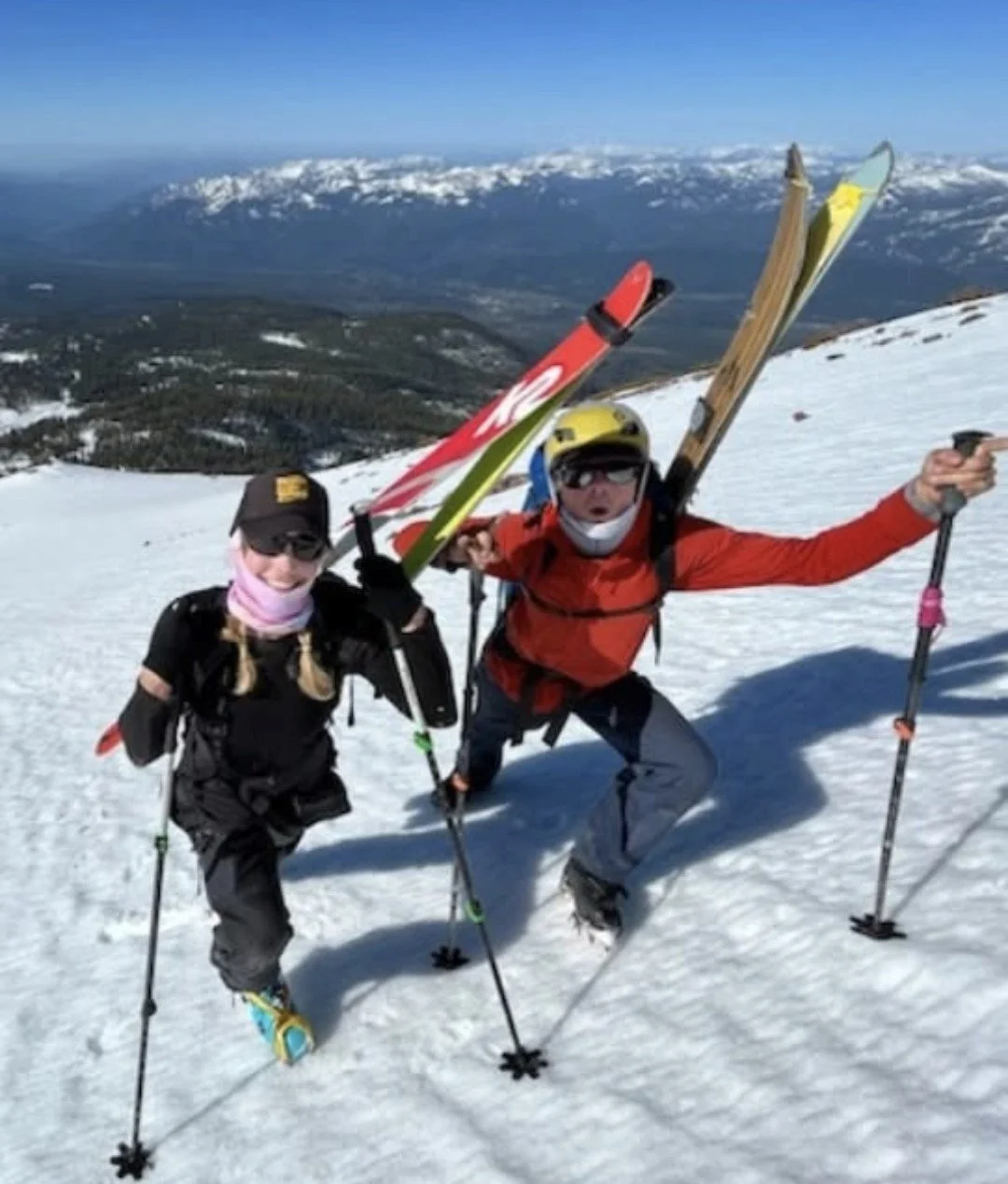
Day 1 — Approach, Camp Setup & Skills Foundation
Team introductions & guide expectations.
Conduct pre-trip briefing, gear check, and route overview.
Learn efficient packing and load management for ski mountaineering objectives.
Ascend to high camp (~10,000–10,400 ft) using efficient uphill skinning and booting techniques.
Establish camp and review alpine camp setup (tent anchoring, snow kitchen, melt water systems).
Conduct skills modules:
Crampon technique (flat-footing, front-pointing, mixed snow travel)
Ice axe use and self-arrest fundamentals.
Summit talk: route planning, weather interpretation, and turnaround times.
-
Goals
Build efficient uphill and downhill travel skills for a multi-day ski mountaineering objective.
Learn transitions between skinning, booting, and crampon travel.
Increase comfort moving and camping in high alpine terrain.
Understand timing and decision-making for a safe summit and ski descent.
Outcomes
Move efficiently on skins and steep terrain with solid pacing and kick turns.
Use crampons and an ice axe confidently during snow climbing sections.
Manage layering, hydration, and nutrition effectively at altitude.
Leave with improved confidence in multi-day ski mountaineering environments.
-
Day 1: Approach and Base Camp Setup
Team & Guide Introductions
Gear Check in town
Ski tour to base camp
Set up base camp
Short ski tour from camp
Skills & snow school
Dinner & Plan for the next day.
Day 2: Summit/High Point Attempt
Early alpine start from base camp.
Expect 6-8 hours ascent to the summit (14,179 ft).
Descend back to base camp.
Rest, hydrate & eat dinner at camp.
Day 3: Ski Descent to Trailhead
Complete remaining ski descent from base camp to Trailhead.
Return to vehicle and conclude trip.
Optional food & drinks in town for trip conclusion
-
Backcountry Touring Experience:
Participants should have prior experience with backcountry skiing & splitboarding.
Proficiency with skinning, uphill travel, transitions and clean movement in variable terrain.
Ability to ride confidently in variable snow conditions on ungroomed terrain.
Physical Fitness:
A high level of fitness is required to endure sustained physical effort, including multiple days of uphill travel, carrying a heavy packs in challenging terrain.
Participants should be capable of 6–8 hours of continuous activity per day with elevation gains of 3,000–5,000 feet.
Comfort in Cold and Remote Environments:
Willingness to spend consecutive nights in the backcountry potentially in harsh weather conditions, with the bare alpine necessities of life.
Solid Teamwork & Communication Skills:
A collaborative mindset, adaptability, and a willingness to work as part of a group are essential for a successful expedition experience.
-
Included:
Friendly AMGA trained ski & splitboard guides.
Applicable recreation and/or forest service permits.
Group rescue gear, first aid, rescue sled, GPS/Satellite phone.
Waste Disposal Bags in compliance with “Leave No Trace” principles.
4 season tents
Ropes
Stoves
Fuel
Pots & pans
Water storage & treatment
Not Included:
Ski/splitboard touring equipment.
Avalanche equipment, ice axe, crampons, harness, carabiners.
Food/Snacks/Meals
Transportation
Guide Gratuities
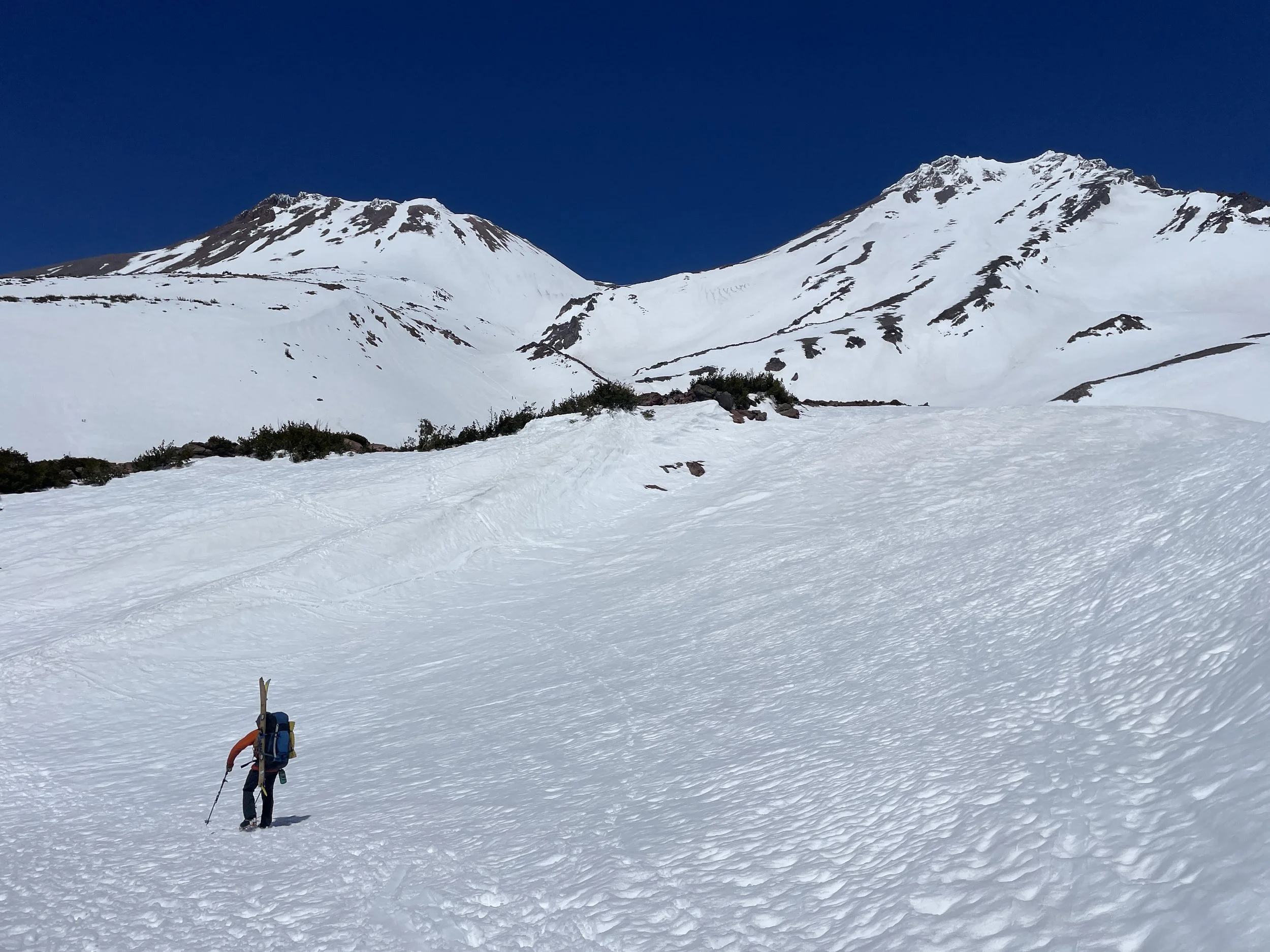
Day 2 — Summit Climb & Ski Descent
Alpine start (1–3 a.m.) and ascent via chosen route (Avalanche Gulch, West Face, or Hotlum-Wintun).
Employ crampon, ice axe use, and pacing strategies for efficient movement at altitude.
Evaluate snow conditions and transition timing for safe ski descent.
Discuss summit decision-making under variable conditions.
Execute ski descent management:
Terrain assessment and line choice
Descent spacing and communication
Managing variable snow conditions (firm, corn, or transitional surfaces)
Return to camp and review individual and group performance.
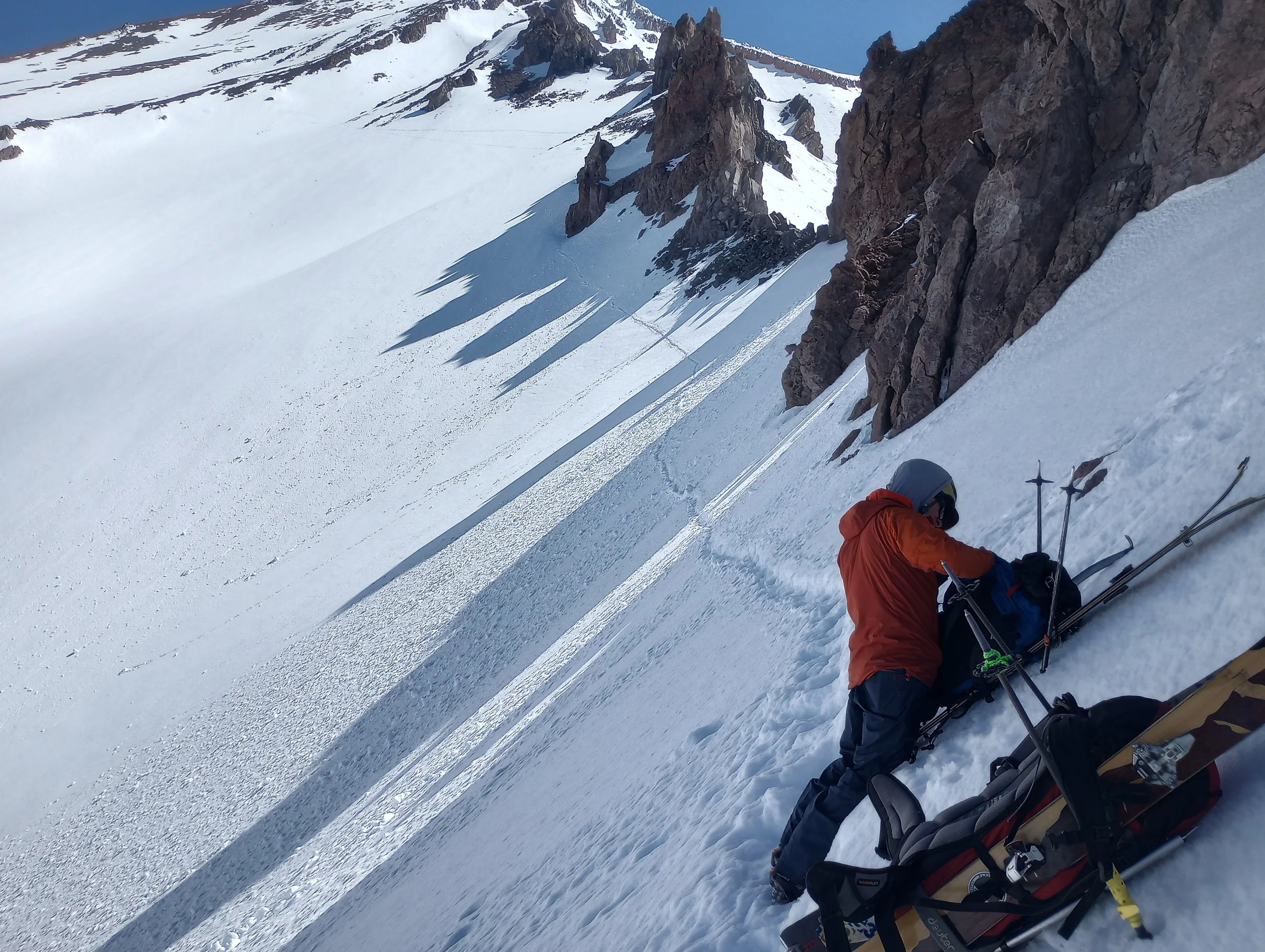
Day 3 — Descent, Debrief & Skill Integration
Break down camp, manage waste, and review Leave No Trace alpine principles.
Conduct ski descent with full packs, emphasizing efficiency and safety.
Review exit route management and group spacing on long corn descents.
Return to trailhead mid-day.
End-of-program debrief:
Review of key takeaways and skill progression
Personal goal assessment and feedback
Discussion of next steps in ski mountaineering progression (e.g., Baker, Shuksan, or multi-day glacier trips).