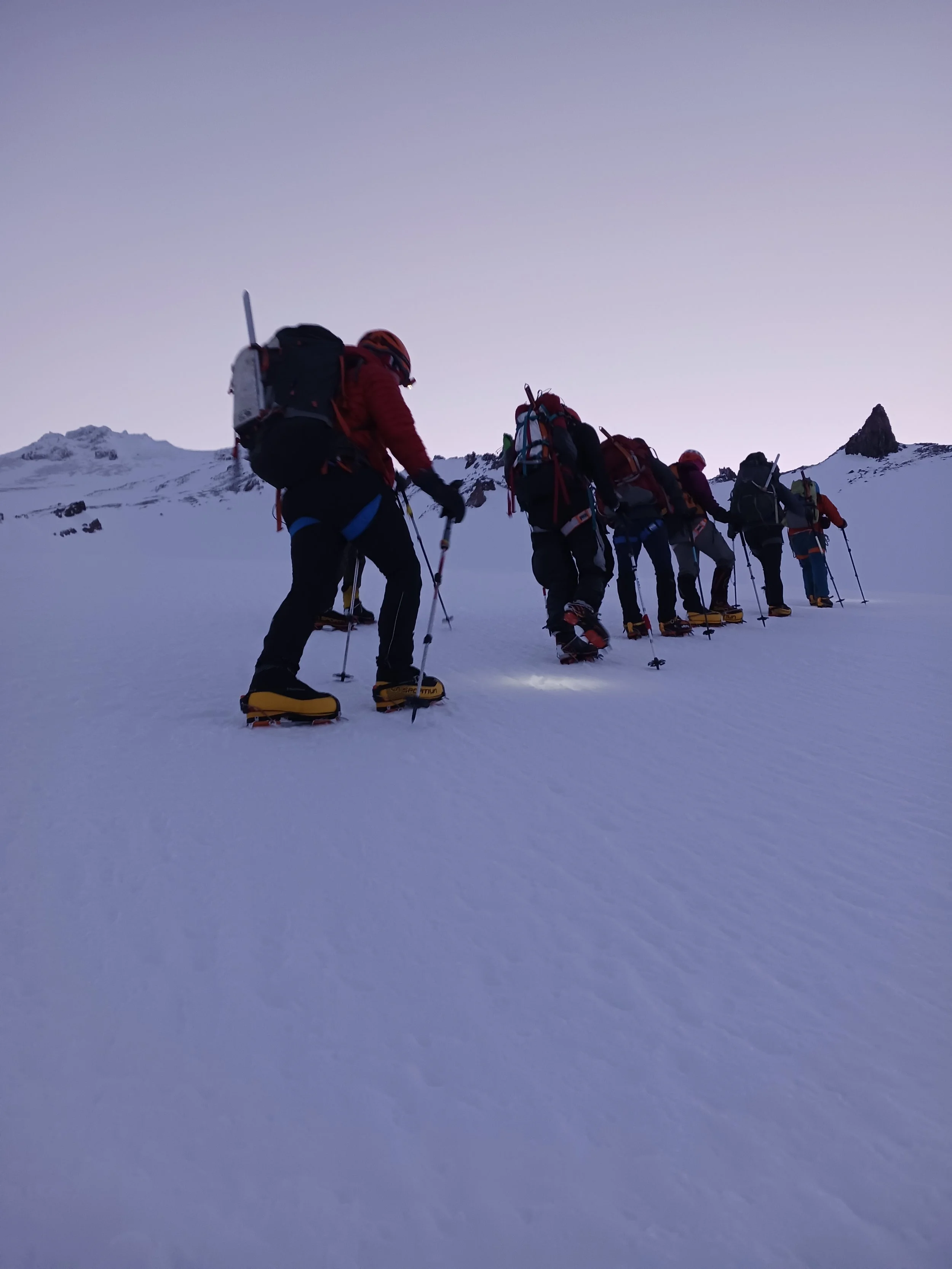
Mount Shasta 3 Day Summit Climb
Mount Shasta Mountaineering Ascent
The Three-Day Mount Shasta Mountaineering Ascent is a focused climb designed for those looking to reach the summit of one of California’s most iconic peaks while learning essential mountaineering skills. Over three days, participants progress from basecamp to the summit with time dedicated to practicing crampon use, ice axe technique, and efficient team movement on snow and ice.
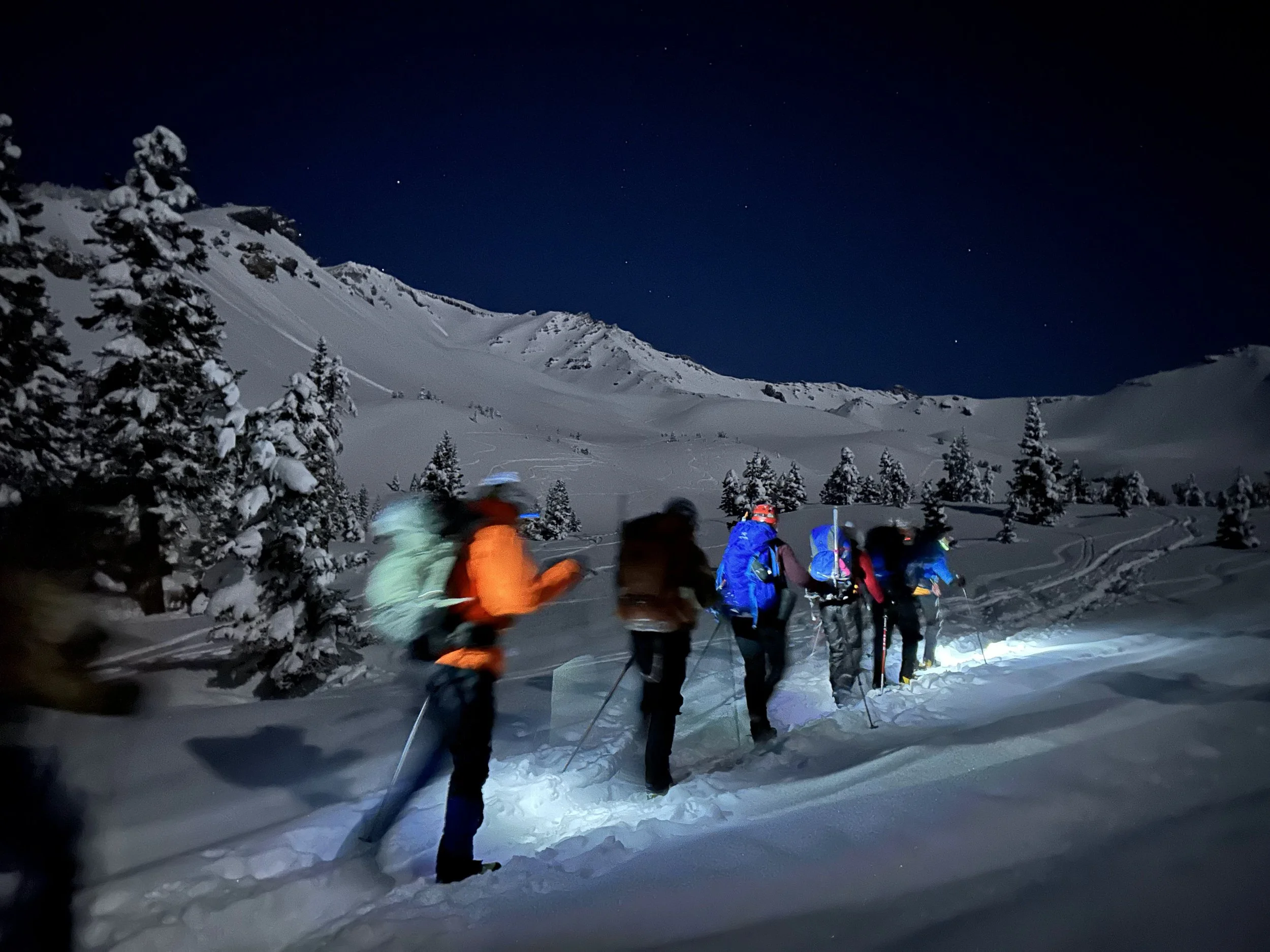
Day one is dedicated to approach and camp setup, with training sessions covering essential movement and safety skills. On day two, the team ascends higher to a high camp, focusing on pacing, route finding, and managing changing snow conditions. The final day begins before dawn with a summit push, climbing under headlamp through Shasta’s upper slopes to reach the summit just after sunrise. After taking in sweeping views that stretch across Northern California and into Oregon, the descent retraces the route to camp and then back to the trailhead.
Participants should expect long, demanding days with significant elevation gain, variable weather, and challenging snow conditions — all part of what makes a true mountaineering experience.
Price: $850.00
Dates:
-
Goals
Summit Mount Shasta: The primary goal for participants is to successfully reach the summit of Shasta, standing at 14,179 feet, which offers breathtaking views and a profound sense of accomplishment.
Skill Development: We emphasize time during the climb to review and develop essential skills for climbing mount Shasta including basic climbing techniques, crampon, ice axe, self arrest, etc.
Team Cohesion: The expedition is designed to foster teamwork and camaraderie among participants, building trust and communication essential for a safe alpine outing.
Physical Conditioning: Climbers should set fitness goals to prepare for the physical demands of the ascent. Ultimately focusing heavily on strength, endurance, and resilience.
Outcomes
Successful Summit Experience: Attempt & tag the top of Mount Shasta. Push yourself mentally & physically.
Improved Mountaineering Skills: Climbers come out of this with more tools in your mountaineering tool kit, enhancing skills and the confidence to embark on further alpine adventures.
-
Day 1
Meet in town, gear check, drive to trailhead
Approach to base camp
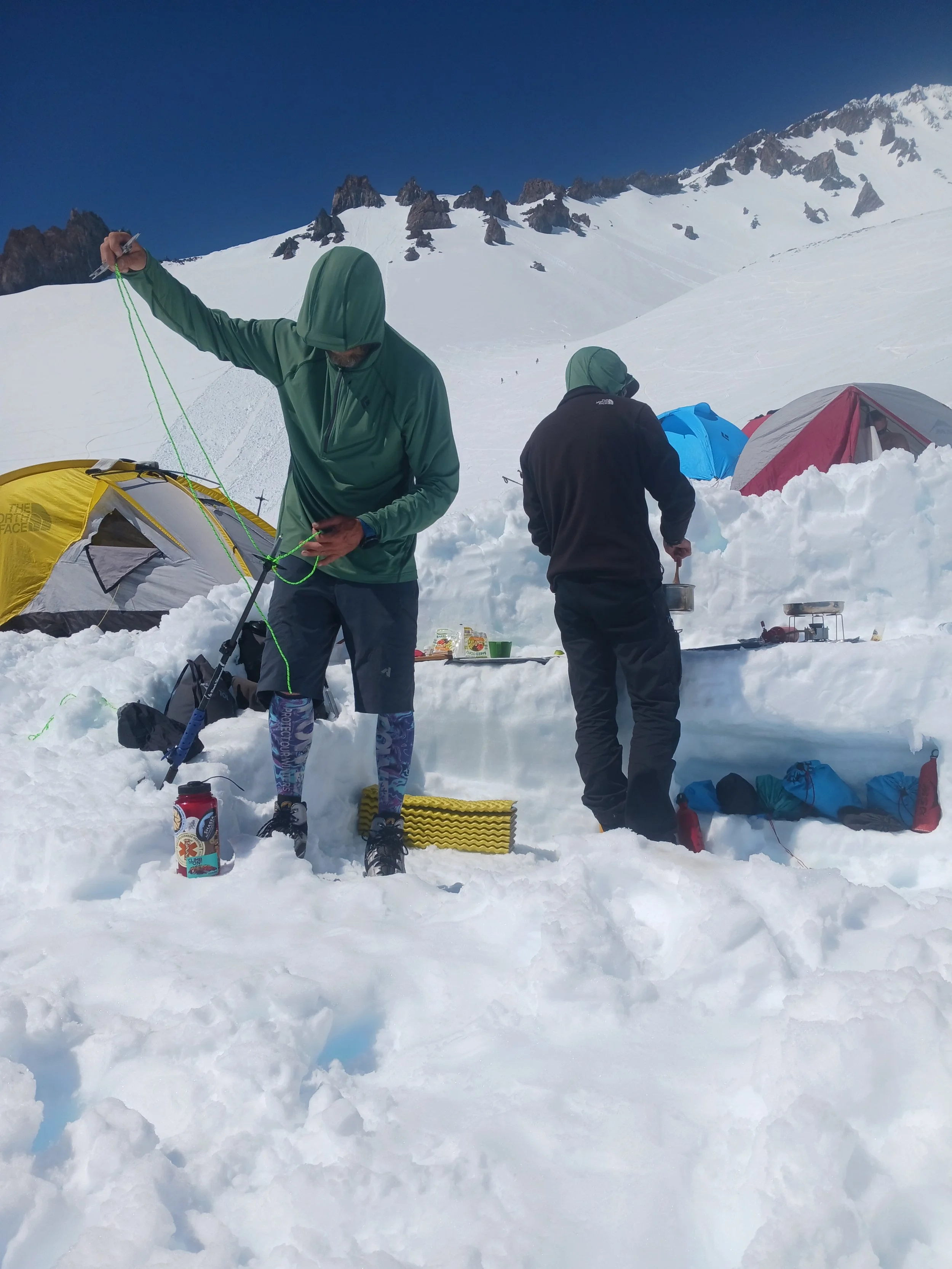
Set camp, basic skills refresher
Day 2
Early start for summit attempt
Ascend summit route
Descend back to camp
Rest and recover
Day 3
Pack up camp
Hike out to trailhead
Debrief and departure
-
Endurance: Mountaineering involves long ascents over varied terrain. A good cardiovascular base is crucial.
Strength: A focus on leg strength, core stability, and overall muscle conditioning will help you navigate uneven slopes with the weight of a mountaineering pack on.
Fitness Level: Participants should have a solid fitness foundation and prior hiking experience in mountainous terrain.
Team work & Communication Skills: Joining a guided trip is an excellent way to gain the necessary communication skills so you are held accountable for pulling your own weight by contributing to the teams decision making.
Note: By ensuring you meet these prerequisites, you can contribute to a safe and enjoyable experience for yourself and others.
-
Included:
Friendly AMGA trained guides.
Applicable recreation and/or forest service permits.
Group rescue gear, first aid, rescue sled, GPS/Satellite phone.
Waste Disposal Bags in compliance with “Leave No Trace” principles.
4 season tents
Ropes
Stoves
Fuel
Pots & pans
Water storage & treatment
Not Included:
Avalanche equipment, mountaineering boots, ice axe, crampons,helmets, harness, carabiners.
Food/Snacks/Meals
Transportation
Guide Gratuities
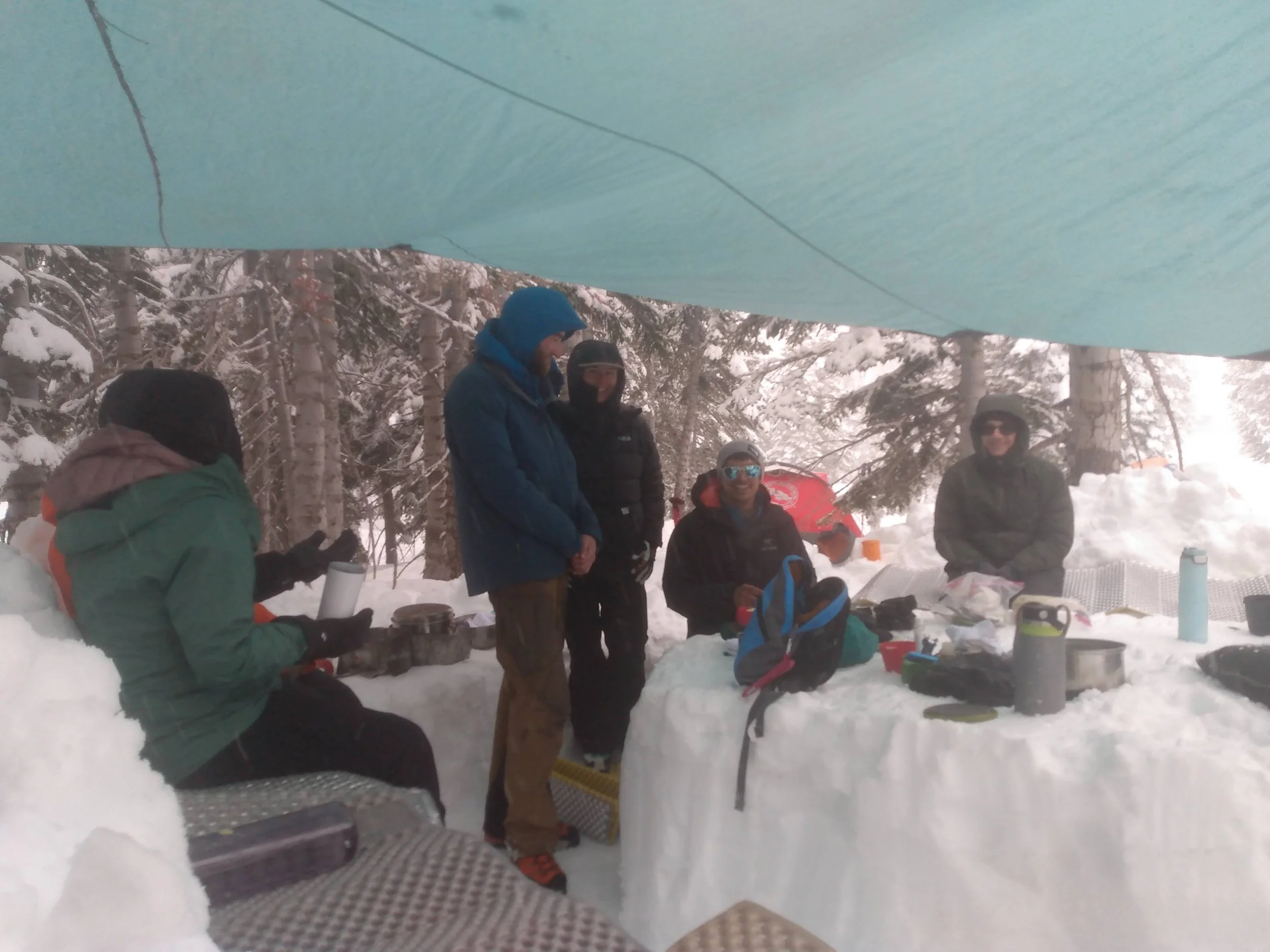
Day 1 — Approach & Skills
Morning
Meet at Sierra Nevada Backcountry Guides base in Mount Shasta for gear check, trip briefing, and route overview.
Distribute group gear and finalize packs.
Drive to Bunny Flat Trailhead (6,950 ft).
Begin ascent to high camp (~10,000 ft, Helen Lake or Horse Camp depending on conditions). Expect 3–4 hours of steady climbing with moderate loads.
Afternoon:
Set up camp and review camp systems, snow kitchen setup, and team organization.
Conduct an on-snow skills session covering:
Ice axe self-belay and self-arrest techniques
Crampon use and footwork on firm snow
Basic rope travel and movement efficiency on snow
Discussion of weather, route conditions, and summit plan
Evening:
Hydration, dinner, and rest.
Final prep for early alpine start.
Day 2 — Summit Attempt
Alpine Start (1–3 AM):
Early breakfast and gear check.
Begin ascent by headlamp through Avalanche Gulch, moving efficiently on firm snow.
Skills reinforced along the way: proper pacing, crampon transitions, self-arrest readiness, and safe rest step technique.
Summit Push:
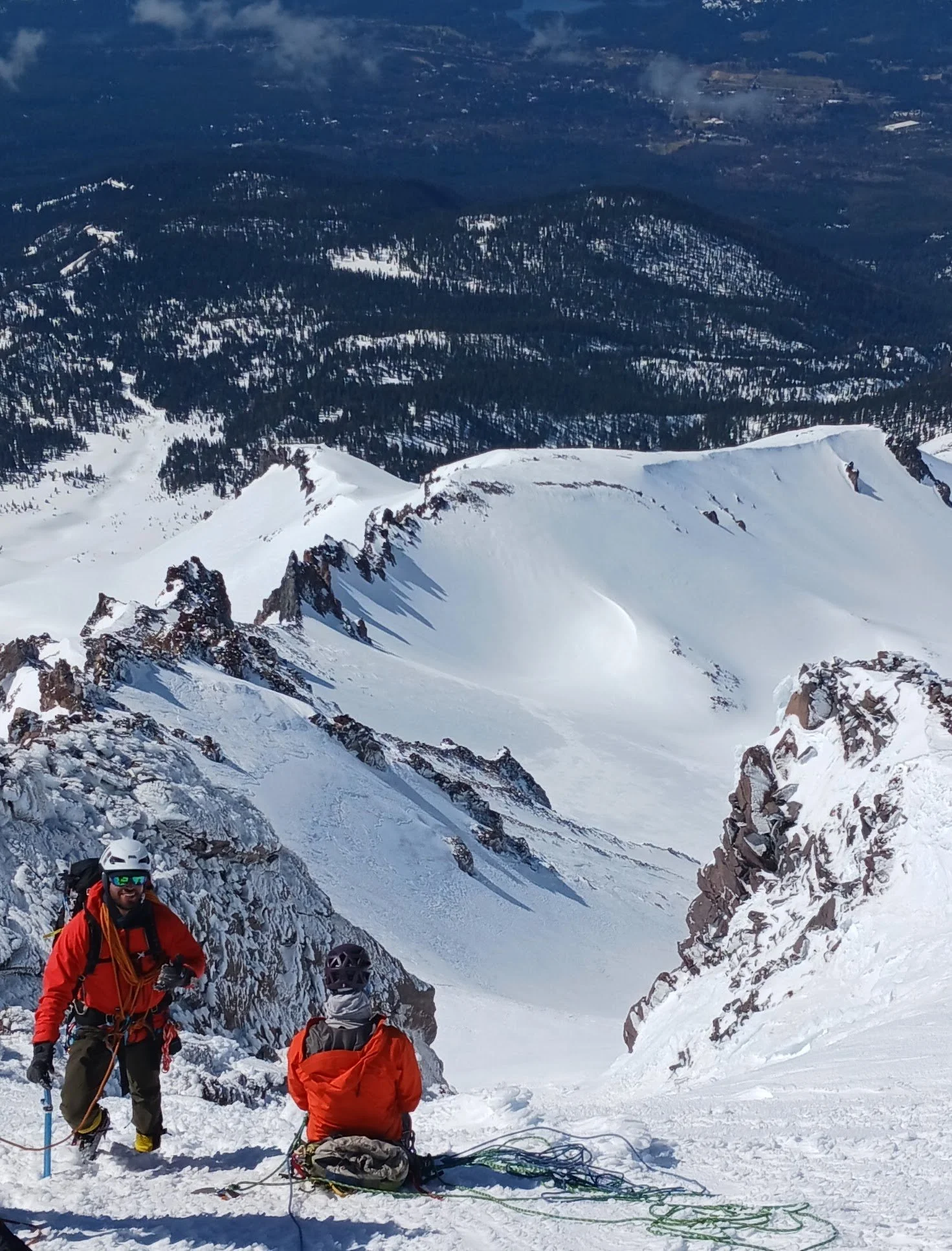
Climb through Red Banks, traverse the Short Hill, and ascend the final slopes of Misery Hill to reach the summit plateau.
Short break, then final climb to the true summit.
Descent:
Careful descent emphasizing downhill movement skills, crampon technique, and glissade safety where appropriate.
Return to high camp by late morning or early afternoon.
Afternoon:
Rest, rehydrate, and review the climb.
Optional anchor placement, and rope team management (time and energy permitting).
Dinner and overnight at camp.
Day 3 — Descent & Debrief
Morning:
Leisurely breakfast and camp breakdown.
Discussion and demonstration on mountain hygiene, Leave No Trace practices, and efficient packing for alpine travel.
Descend to Bunny Flat Trailhead (approx. 2 hours
Afternoon:
Course debrief and certificate of completion.
Optional discussion: next-step objectives such as Mount Rainier, Shuksan, or introductory glacier climbs.