Intermediate Alpine Leadership Course
5 Day - Intermidiate Mountaineering Course
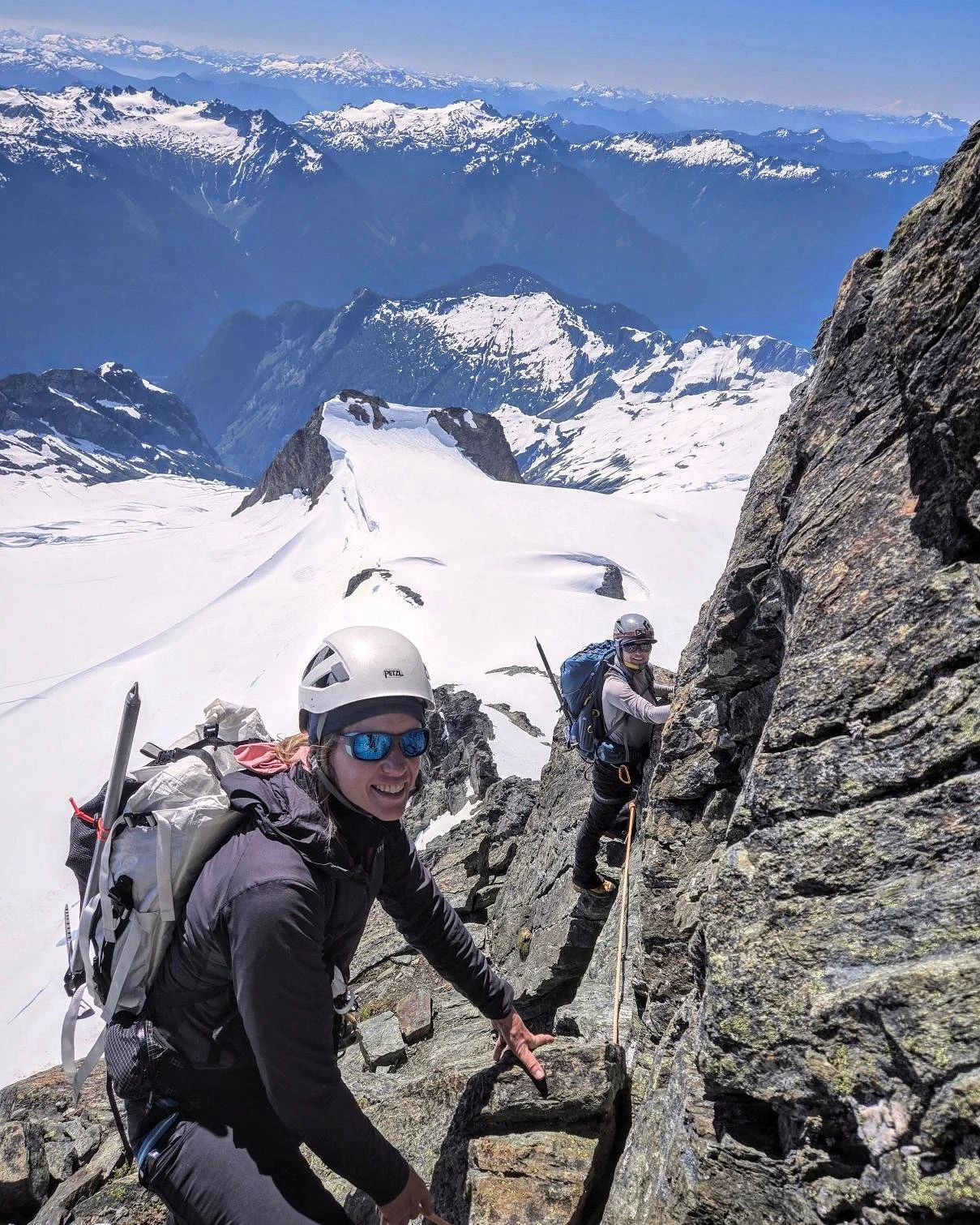
The Intermediate Mountaineering course with Sierra Nevada Backcountry Guides is designed for climbers and backcountry travelers who already have basic snow travel experience and are ready to take the next step into more complex alpine terrain. This multi-day program builds on foundational skills and introduces the technical systems required for roped travel and glacier environments, preparing participants for bigger mountains and more ambitious objectives.
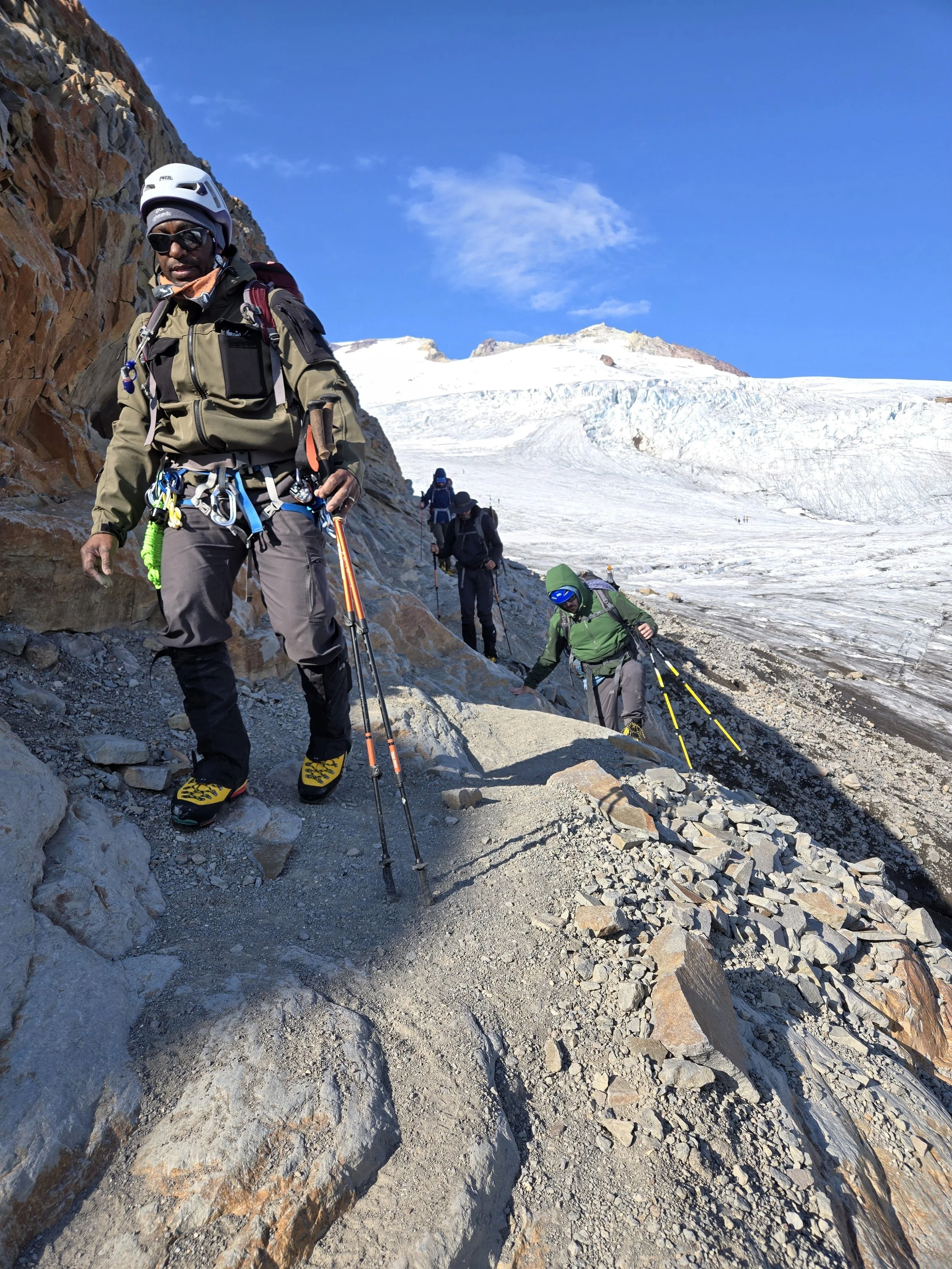
Instruction covers advanced crampon and ice axe techniques, efficient movement on steep snow, and strategies for safe travel in varied alpine conditions. Students learn how to establish and maintain snow camps in expedition-style settings, developing self-sufficiency for longer days and overnight missions. A major focus of the course is rope team travel and glacier skills—anchoring, rope management, crevasse navigation, and the fundamentals of rescue systems—providing the confidence to move safely in glaciated terrain.
Throughout the course, participants practice not only technical skills but also decision-making, hazard recognition, and group management. Each session builds progressively, creating a structured learning environment that emphasizes both individual competence and team leadership.
Price: $1,250.00
Dates: TBD
Day 1: Orientation & Approach
Gear Check & Packing: Review of personal and group gear
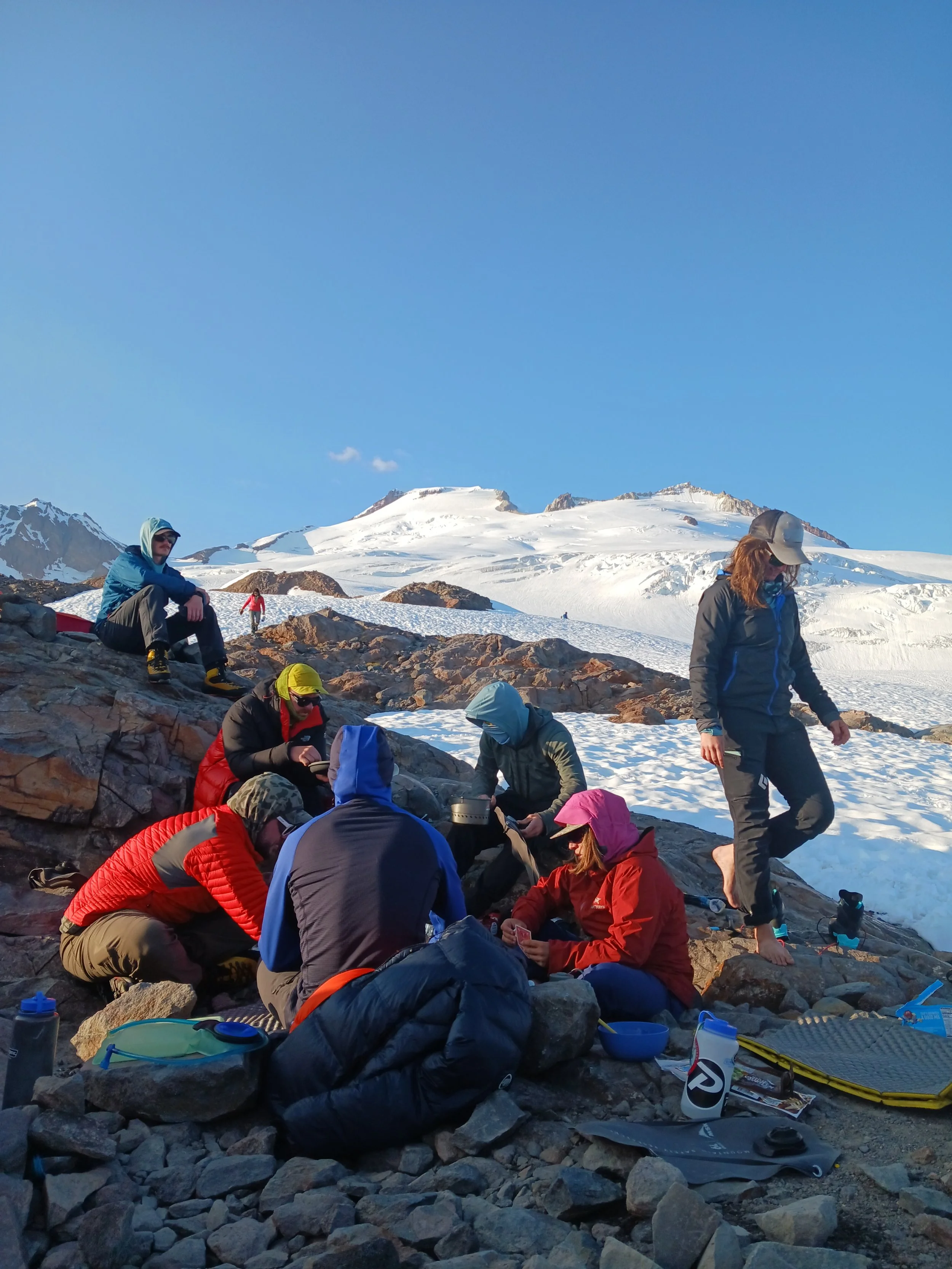
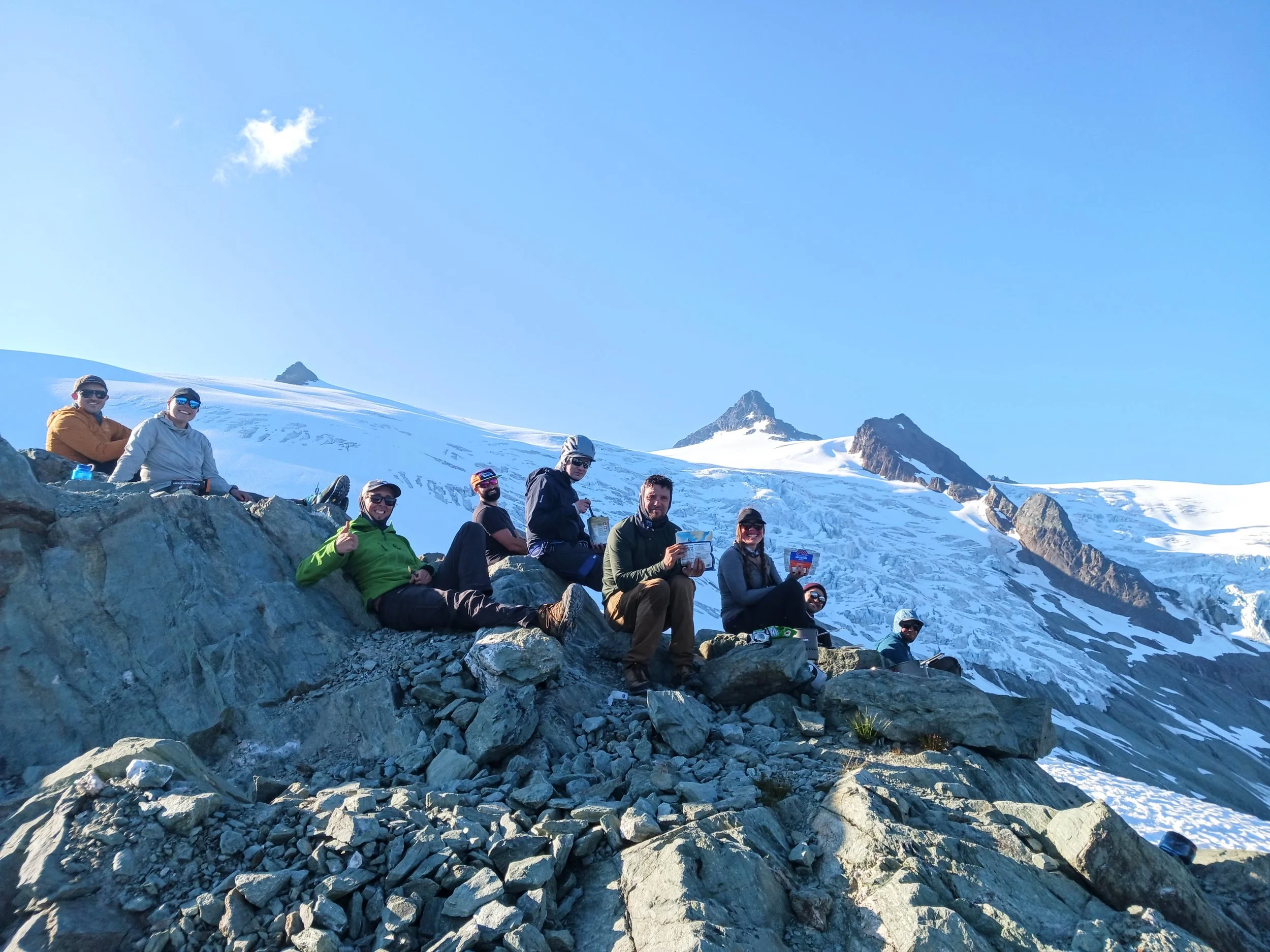
Approach & Camp Setup: Hike/ski to basecamp near glaciated terrain.
Evening Session:
Knots & hitches (prusik, klemheist, autoblock, mule-overhand).
Rope team roles & responsibilities refresher.
-
This course focuses on refining essential techniques such as advanced rope management, effective navigation, and safe travel in mountain environments. Participants will learn to assess risks and make informed decisions in dynamic mountain conditions.
Goals:
Skill Development: Participants will enhance their technical climbing skills, including advanced rope management, glacier travel techniques, and efficient belaying practices.
Teamwork and Communication: Build effective communication skills within a team setting to ensure safe and successful climbing expeditions.
Risk Assessment and Management: Develop the ability to assess environmental and personal risks, implement safety protocols, and make informed decisions under pressure.
Navigation Proficiency: Gain confidence in using both traditional and electronic navigation tools, including topographic maps, compasses, and GPS devices.
Physical Conditioning: Improve physical endurance and strength necessary for more challenging climbing routes through tailored conditioning exercises and strategies.
Outcomes:
Technical Competence: Participants will demonstrate proficiency in advanced climbing techniques, such as lead climbing, multi-pitch ascent, and crevasse rescue.
Enhanced Team Dynamics: Successful collaboration with peers will be evident through improved coordination in group climbing activities and shared decision-making.
Safety Awareness: Graduates will show a heightened awareness of safety protocols, effectively identifying hazards and taking preventative measures on climbs.
Effective Navigation Skills: Individuals will be able to navigate unfamiliar terrain confidently, utilizing both maps and electronic devices to find the optimal climbing routes.
Physical Readiness: Participants will exhibit improved physical capability, enabling them to tackle more demanding climbs and enduring longer ascents with less fatigue.
Note: Upon completion of the Intermediate Mountaineering Course, participants will be equipped with the skills, knowledge, and experience necessary to pursue advanced mountaineering challenges safely and effectively.
-
Day 1: Introduction and Skills Refresh
Meet your guide, gear check & fellow course members.
Course orientation and overview.
Hike into basecamp.
Movment on snow and ice; skills practice involving different types of terrain and conditions.
Skills refresher: rope management, knot tying, and belaying techniques.
Day 2: Glacier Travel and Crevasse Rescue Techniques
Breakfast and go over plan for the day.
Introduction to glacier travel; step techniques, body movement, and proper positioning on glaciers.
Lunch in the field.
Crevasse rescue techniques; practice of self-rescue and partner rescue scenarios.
Day 3: Advanced Climbing Techniques and Navigation Skills
Breakfast and briefing for the day.
Advanced climbing techniques; use of crampons and ice axes in varied conditions.
Lunch at a scenic location.
Navigation skills; route-finding, map reading, and use of compass and altimeter in the field.
Day 4: Summit Attempt and Course Conclusion
Early breakfast and final gear check.
Summit attempt; applying learned skills in real-time as participants work towards reaching the designated summit.
Lunch at the summit or designated turnaround point.
Descent and return to base camp; debriefing and discussion on experiences and lessons learned.
Closing ceremony; distribution of certificates and feedback session.
Day 5: STILLLL NEEEEDD TOOOOO COMPLETEEEE
Note: This course aims to build confidence and competence in mountaineering skills, empowering participants to tackle more challenging climbs safely and effectively.
-
Endurance: Mountaineering involves long ascents over varied terrain. A good cardiovascular base is crucial.
Strength: A focus on leg strength, core stability, and overall muscle conditioning will help you navigate uneven slopes with the weight of a mountaineering pack on.
Fitness Level: Participants should have a solid fitness foundation and prior hiking experience in mountainous terrain.
Team work & Communication Skills: Joining a guided trip is an excellent way to gain the necessary communication skills so you are held accountable for pulling your own weight by contributing to the teams decision making.
Note: By ensuring you meet these prerequisites, you can contribute to a safe and enjoyable backcountry skiing experience for yourself and others.
-
Included:
Friendly AMGA trained guides.
Applicable recreation and/or forest service permits.
Group rescue gear, first aid, rescue sled, GPS/Satellite phone.
Waste Disposal Bags in compliance with “Leave No Trace” principles.
4 season tents
Ropes
Stoves
Fuel
Pots & pans
Water storage & treatment
Not Included:
Avalanche equipment, mountaineering boots, ice axe, crampons,helmets, harness, carabiners.
Food/Snacks/Meals
Transportation
Guide Gratuities
Day 2: Advanced Snow Climbing
Route Planning Session: Review of maps, weather, & route options
Front-pointing & hybrid crampon techniques (French/German).
Two-tool climbing on steep snow and alpine ice.
Efficient self-belay vs. self-arrest.
Picket placement (vertical, horizontal, deadman).
Running belays and team arrest scenarios.
Different types of snow belays
Day 3: Glacier Travel & Hazard Management
Crevasse Navigation: Reading glaciers, recognizing snow bridges, probing techniques.
Rope Team Management: 2, 3, and 4 person team travel on glaciers.
Hazard Mitigation: Managing spacing, arresting partner falls, & transition efficiency.
Evening Session: Anchoring systems for rescue setups.
Day 4: Crevasse Rescue Systems
Rescue Fundamentals:
Arrest and anchor building under load.
Load transfers: review several different load transfer techniques
Hauling Systems:
3:1 Z-pulley and 6:1 variations.
Drop-loop C-system.
Counterbalance rescue.
Practical Scenarios:
Partner “falls” into crevasse; full rope team executes rescue.
Day 5: Integrated Mountaineering Objective & Hike Out to Trailhead
Alpine Start: Rope up and climb a snow/ice/glacier objective (moderate summit or technical route).
Application: Route finding, transitions, belayed sections, hazard management.
Summit Attempt (if conditions allow): Opportunity to apply skills in real terrain.
Debrief: Review decision-making, teamwork, and efficiency.