Overview of Harnesess
Climbing, skiing, & Alpine Mountaineering Harnesses
Rock climbing harnesses, mountaineering harnesses, and ski mountaineering harnesses are all designed for vertical and alpine pursuits but differ significantly in their construction, weight, and intended use. Each type prioritizes specific features to optimize performance and safety in its respective environment.
-Rock Climbing Harnesses
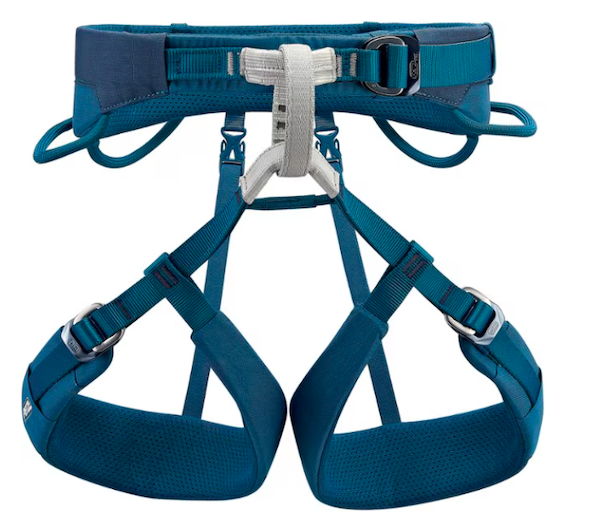
Rock climbing harnesses are built for comfort and durability, as they are often worn for extended periods while working routes or belaying. They feature thickly padded waist belts and leg loops to distribute pressure evenly, making them ideal for sport climbing, trad climbing, and big wall climbing. Most rock climbing harnesses include four or more gear loops for carrying quickdraws, cams, and other protection, as well as a belay loop for attaching a belay device. Adjustability varies, with some models offering fixed leg loops for a streamlined fit, while others include adjustable buckles to accommodate different layering needs. Because rock climbing harnesses prioritize comfort over weight savings, they tend to be heavier and bulkier than their mountaineering or ski mountaineering counterparts.
-Mountaineering Harnesses
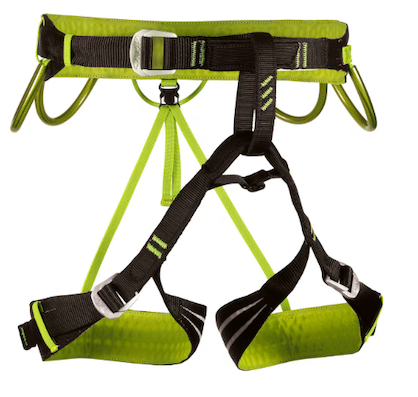
Mountaineering harnesses are designed for versatility, balancing weight savings with functionality. They are typically lighter than rock climbing harnesses and feature a minimalist design to reduce bulk, making them suitable for wearing over multiple layers in alpine environments. Unlike rock climbing harnesses, which emphasize comfort during prolonged hanging, mountaineering harnesses prioritize ease of movement and the ability to be quickly donned or removed while wearing crampons or skis. They often include adjustable leg loops with quick-release buckles, allowing climbers to put them on without stepping through the loops. Gear loops are usually fewer and more streamlined, designed primarily for carrying carabiners, ice screws, and a limited amount of protection. While they are comfortable enough for short periods of hanging, they are not intended for sustained suspension like rock climbing harnesses.
-Ski Mountaineering Harnesses
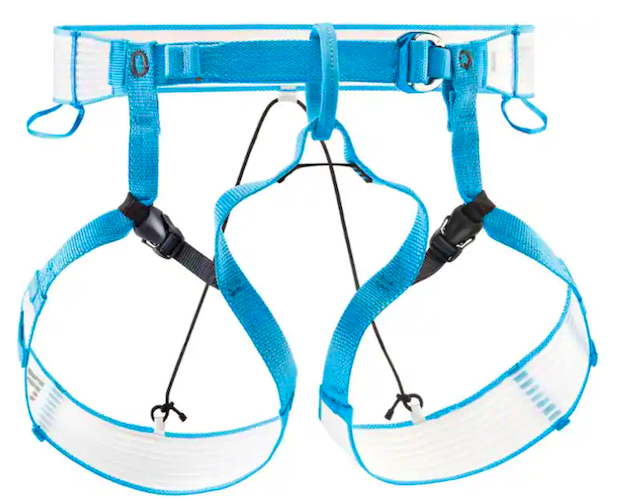
Ski mountaineering harnesses are the lightest and most minimalist of the three, designed specifically for backcountry skiing and ski mountaineering objectives that may involve glacier travel, rappels, or crevasse rescue. These harnesses prioritize weight savings and packability, often constructed from thin webbing with minimal or no padding. Like mountaineering harnesses, they are designed for easy donning over ski boots and layers, with leg loops that fully open for quick application. Gear loops are minimal—typically one or two small loops—sufficient for carrying basic glacier travel equipment but not meant for extensive climbing protection. Many ski mountaineering harnesses lack a dedicated belay loop, requiring climbers to tie directly into the waist belt and leg loops. While they offer security for technical sections, they are not built for prolonged comfort while hanging or belaying.
________________________________________________
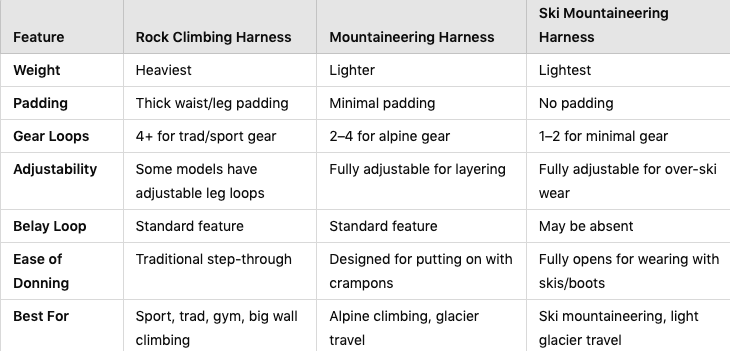
Key Differences at a Glance
Final Thoughts
Each type of harness is purpose-built for its specific environment, and choosing the right one depends on the intended activity. While rock climbing harnesses offer maximum comfort and gear capacity, mountaineering and ski mountaineering harnesses prioritize weight savings and functionality for their respective disciplines.