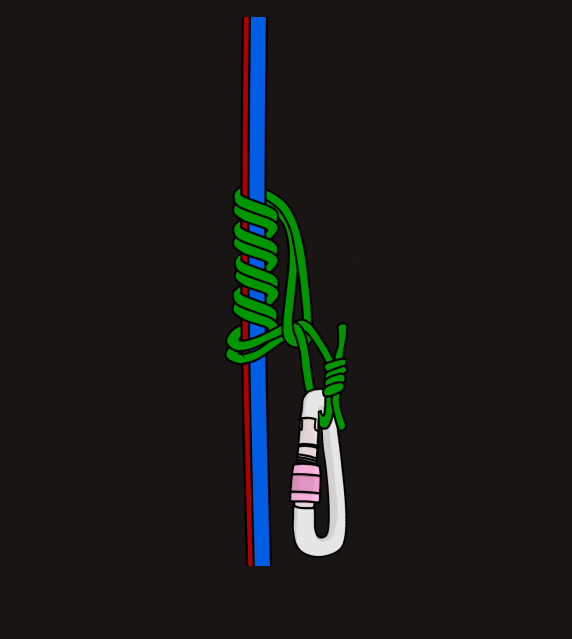
Friction Hitches in Climbing & Mountaineering
A friction hitch is a type of knot that tightens around a separate rope when weighted, creating friction to grip the rope, but can slide when unweighted or manually adjusted. It is commonly used in climbing, rescue operations, ascending & descending, backing up rappels, or creating self-rescue systems. These hitches work by wrapping a smaller cord around a larger rope, creating friction that tightens under load.
The three main hitches in climbing include the Prusik, Autoblock & Klemheist. Friction hitches are essential for safety and versatility in climbing, offering reliable ways to secure and manage ropes in various situations.
________________________________________________
Prusik Hitch
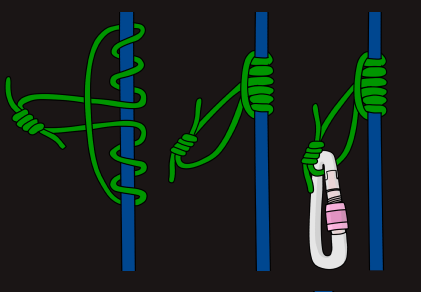
The Prusik hitch is a versatile friction knot used in climbing for ascending a rope, backing up rappels, and self-rescue situations. To set up a Prusik, you need a loop of cord (typically 60%–80% of the main rope’s diameter) tied with a double fisherman’s knot. Wrap the loop around the main rope at least three times, ensuring the wraps lay neatly side by side. Then, pass the loop back through itself and pull snug. When weighted, the friction from the wraps grips the rope, holding it securely in place.
To use a Prusik for ascending, attach two Prusiks to the rope—one for your harness and another as a foot loop. By alternately weighting and sliding the knots up the rope, you can climb efficiently. In rappelling, a single Prusik can be placed below the rappel device on a leg loop, acting as a hands-free backup. If you let go, the hitch grips the rope, preventing an uncontrolled descent.
The Prusik is reliable because it grips when weighted but can be easily released by unweighting and sliding it. However, it works best on a clean, dry rope and can be difficult to release under heavy loads. Because of this, it’s essential to practice using the Prusik in controlled conditions before relying on it in the field. Whether for emergencies or efficiency, mastering this simple but powerful knot is a valuable skill for any climber.
Autoblock
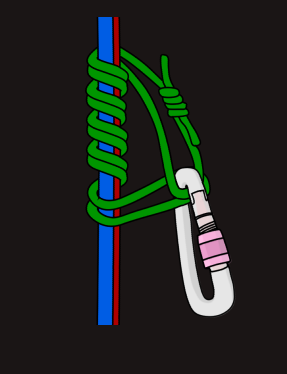
The autoblock hitch is a simple yet effective friction hitch used in climbing, primarily as a rappel backup. It consists of a loop of cord or a sewn sling wrapped around the main rope below the rappel device. When properly tied, the autoblock grips the rope when weighted but allows for easy sliding when unweighted, making it an excellent safety mechanism in case of an accidental loss of control during descent.
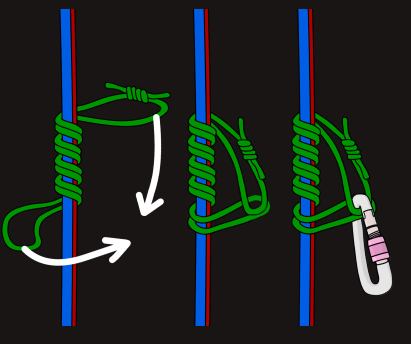
To set up an autoblock, take a loop of cord (typically 5–7mm accessory cord or a thin sling) and wrap it around the rope three to five times, ensuring the wraps are neat and parallel. Then, clip both ends of the loop to your harness leg loop using a locking carabiner. When descending, keep a hand on the autoblock and slide it down as you go. If you accidentally let go of the rappel rope, the hitch will engage, preventing an uncontrolled descent.
One key advantage of the autoblock is its ease of release compared to other friction hitches like the Prusik. Because it only tightens under moderate friction, it’s less likely to jam under heavy loads, making it ideal for use on rappel. However, climbers should ensure the autoblock does not interfere with their rappel device and should always test it before committing to a rappel. Practicing its use in a controlled setting will help ensure it functions smoothly and safely in real-world climbing scenarios.
Klemheist
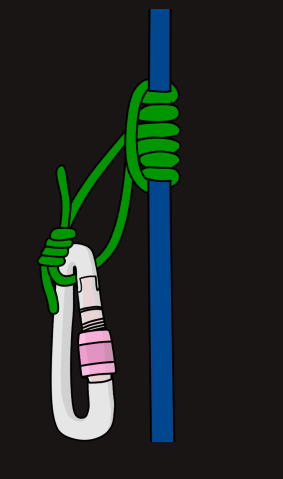
The Klemheist hitch is a friction knot used in climbing for ascending a rope, backing up rappels, or creating self-rescue systems. It is similar to a Prusik but allows for easier adjustment in one direction while gripping firmly in the other.
To tie a Klemheist, use a loop of cord or a sling and wrap it around the main rope three to five times, keeping the wraps neat and snug. Then, pass the loop entirely through itself at the end of the wraps and pull tight. When weighted, the knot grips the rope securely; when unweighted, it can be easily slid up or down.
The Klemheist is particularly useful when you need a quick, reliable hitch that is easy to release under load. However, it only grips in one direction, so it’s best suited for ascending or acting as a rappel backup when you need a smooth downward adjustment.
________________________________________________
Final Thoughts & Considerations
When using friction hitches in climbing, it’s essential to consider factors like rope compatibility, hitch selection, and environmental conditions to ensure optimal performance and safety. Different hitches offer varying levels of grip, adjustability, and ease of release, making it important to choose one that suits the specific application, whether for ascending, self-belay, or rescue scenarios. Proper rope diameter and material selection can significantly impact the effectiveness of the hitch, as can moisture, dirt, and wear over time. Regular inspection, proper tying techniques, and backup systems enhance reliability, reducing the risk of slippage or failure. Ultimately, mastering friction hitches requires practice and an understanding of their limitations, reinforcing the need for sound judgment and redundancy in any climbing system.