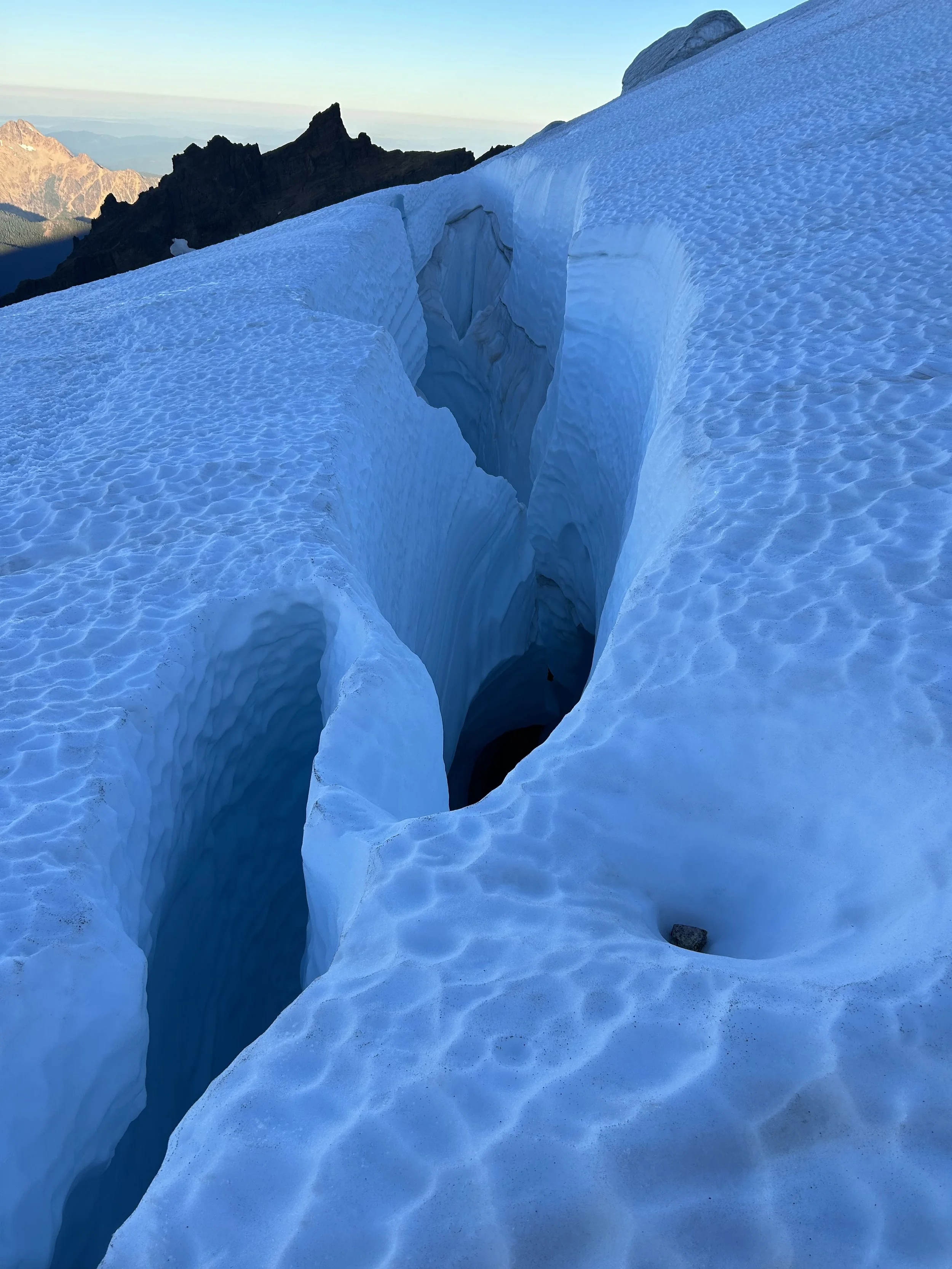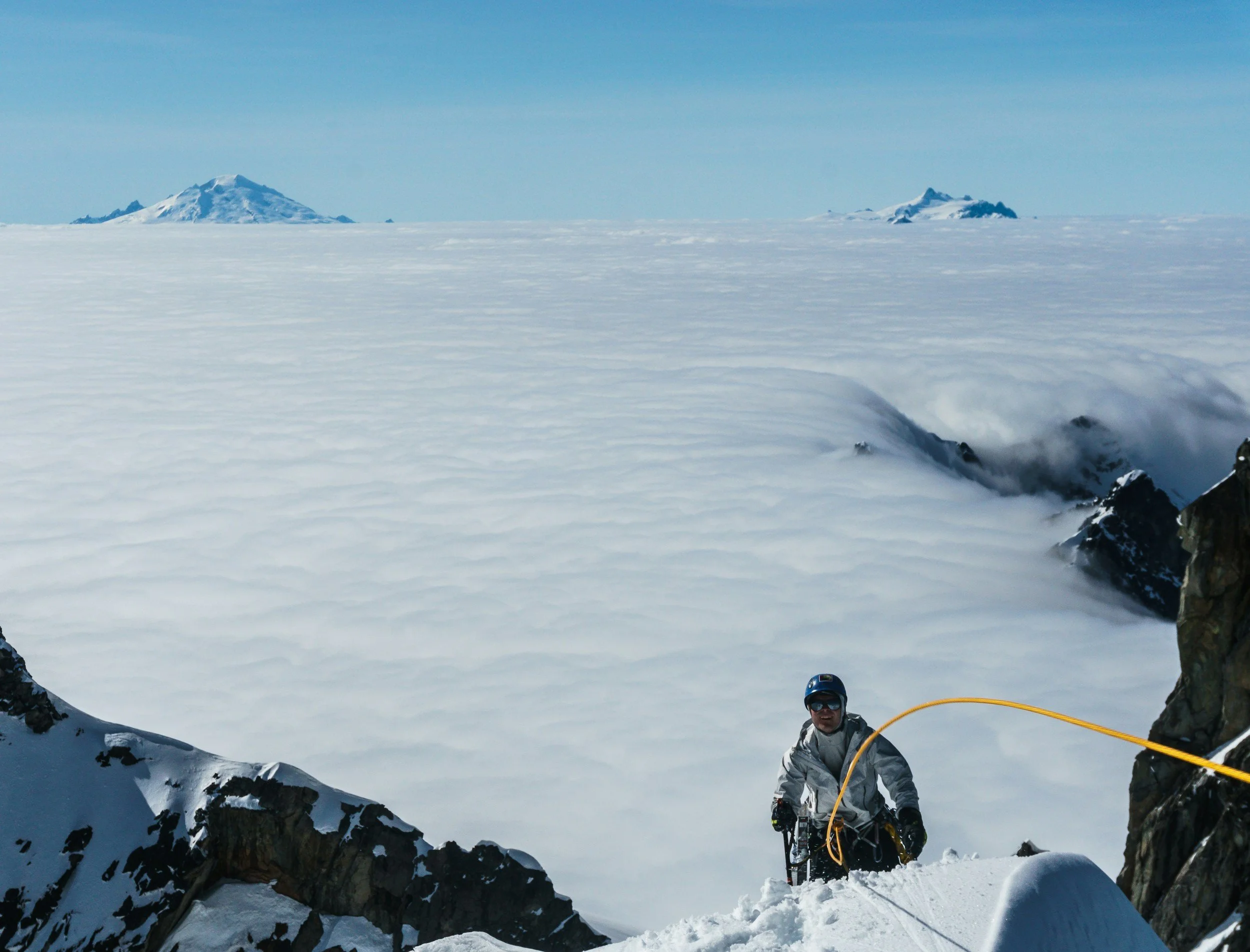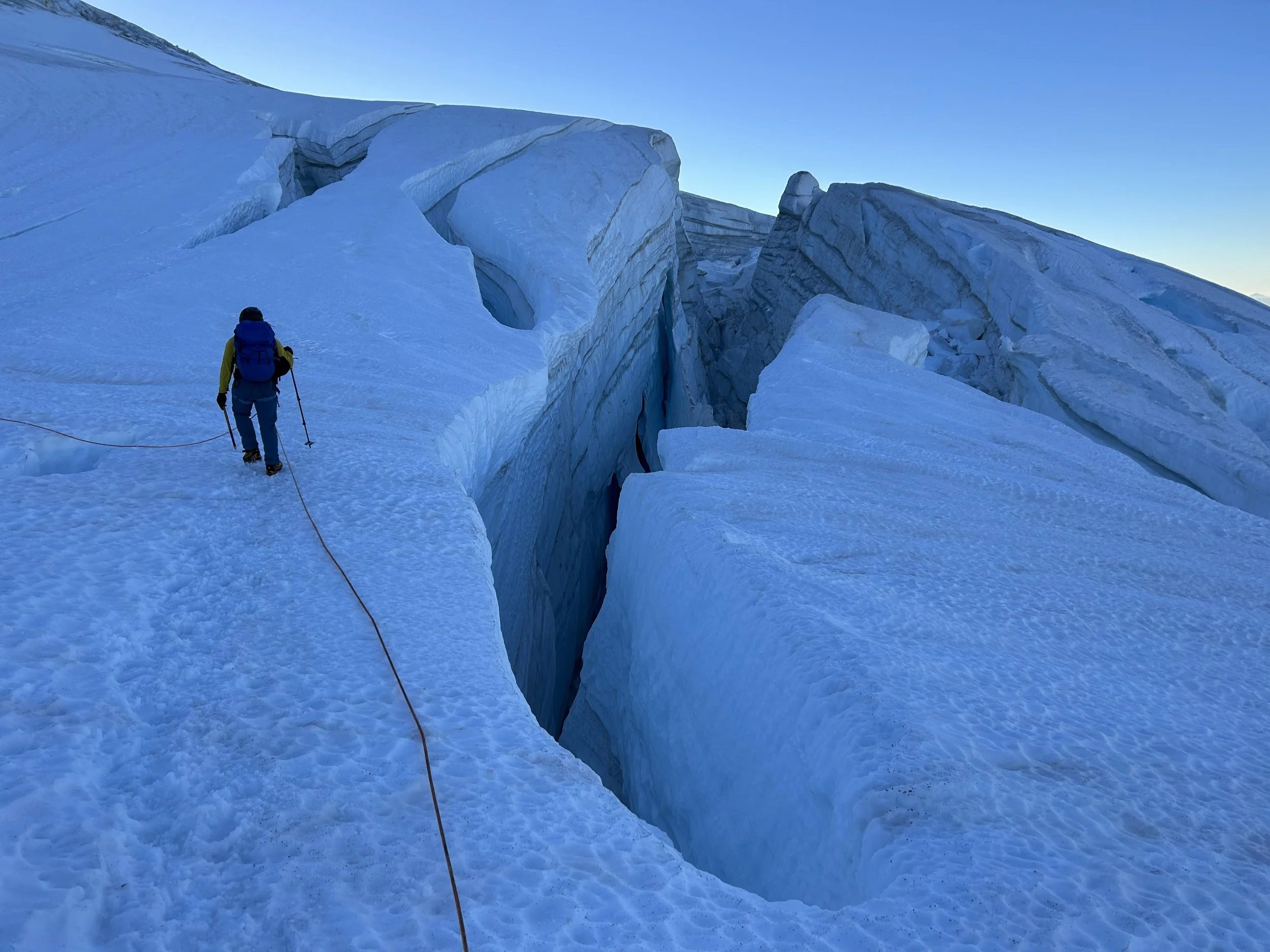
Crevasse Rescue Basics
Our crevasse rescue course is a hands-on introduction to one of the most critical skills in mountaineering and glacier travel: knowing how to get yourself or a partner out of a crevasse. This course is built for, skiers, splitboarders, and mountain climbers who want a clear, approachable entry point into rescue systems without the pressure of immediately stepping onto a glacier.
Over the span of the day, we focus on the baseline fundamentals—anchoring, rope management, hauling systems, and putting it together—so that students leave with a basic toolbox of techniques to practice on their own. Instead of overwhelming participants with complexity, we break crevasse rescue down into clear, concrete steps. Students are exposed to one or two rescue systems, giving a visual understanding without overwhelming with complicated systems.
Classroom settings may include an applicable snowbank, hillside, or even a city park, depending on location and time of the year. These venues allow for focused repetition, immediate feedback, and a controlled learning environment where the emphasis is on understanding principles, the process, and building confidence to go practice on your own.
1 Day - Crevasse Rescue Course
Price: $215 per person
Dates: TBD
-
Participants will learn hauling systems, mechanical advantage, and anchors, emphasizing teamwork and communication. By the end of the course, participants will be well-prepared to take on glaciated terrain with the skills to ensure their safety and the safety of their peers.
Goals
Skill Development: Equip participants with the essential technical skills needed to perform a crevasse rescue, including knot tying, anchor building, rope management, and the use of rescue equipment.
Safety Awareness: Foster a comprehensive understanding of the dangers associated with glacier travel, emphasizing the importance of risk assessment and decision-making in hazardous environments.
Team Coordination: Enhance teamwork and communication skills necessary for effective rescues, ensuring all participants can operate efficiently under pressure.
Incident Management: Teach participants the protocols and best practices for managing crevasse rescue situations, including victim assessment and medical considerations.
Equipment Familiarization: Provide hands-on experience with state of the art rescue gear such as harnesses, pulleys, and snow anchors, ensuring participants are confident in their use.
Outcomes
Competency in Rescue Techniques: Participants will be able to demonstrate the ability to perform self-rescue and partner rescue techniques in a simulated crevasse scenario.
Improved Decision-Making Skills: Graduates will be better equipped to make informed decisions regarding glacier travel, including recognizing hazardous conditions and implementing preventative measures.
Enhanced Team Dynamics: After the course, participants will exhibit improved teamwork skills, allowing for seamless collaboration during emergencies and enhanced group safety awareness.
Increased Confidence: Participants will leave the course with a heightened sense of confidence in their ability to respond to emergency situations, contributing positively to their overall mountaineering experience.
Knowledge of how to practice without a guide: Participants will have a solid foundation of knowledge relating to ongoing risk assessment, rescue drills, and post-rescue care, empowering them to continue learning and practicing their skills beyond the course.
-
8:00am: Meet your guide at the designated trailhead for the day. Here we will do introductions, a full gear check & go over the plan for the day.
8:30am: Begin the hike into our venue for the day. We well spend the majority of the day based out of one area to maximize our time learning & minimize the necessary travel time.
12:00pm: 30 Minute break for lunch and refuel for the second half of the day.
3:45pm: Arrive back to the trailhead. Do a debrief of the day and say our goodbyes.
-
This is a beginner mountaineering course. No prior mountaineering experience required. Arrive with a open mind and prepare to use your brain & problem solving skills!
Solid fitness level: Even through we are based in one area for a majority of the course, we will be doing a lot of physical work the entire day.
Basic knowledge of knots: It helps to have a basic understanding of knots and hitches prior to the start of the course. ***Upon registration for this program, you will receive a small list of recourses to get you on board with the hitches & knots we will use throughout the course.
-
Included:
Friendly AMGA trained guides
Applicible recreation & forest service permits
Ropes, snow protection, group training gear
Group first aid & GPS communication devices
Waste Disposal bags in compliance with Leave “No Trace Principles”
Not included:
Crampons, ice axe, harness, carabiners
Beacon, Probe, Shovel
Food & Snacks
Transportation
Guide Gratuities
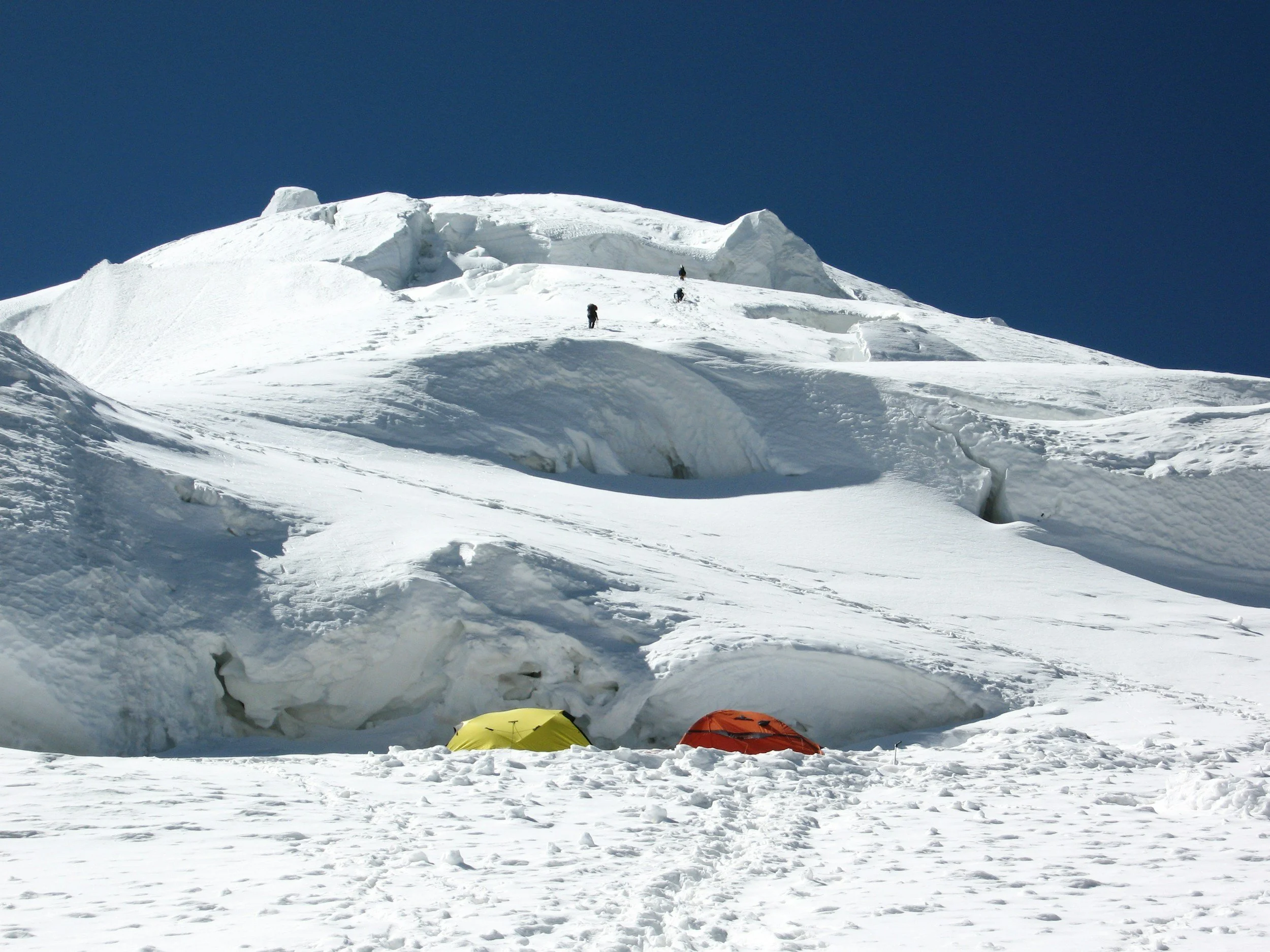
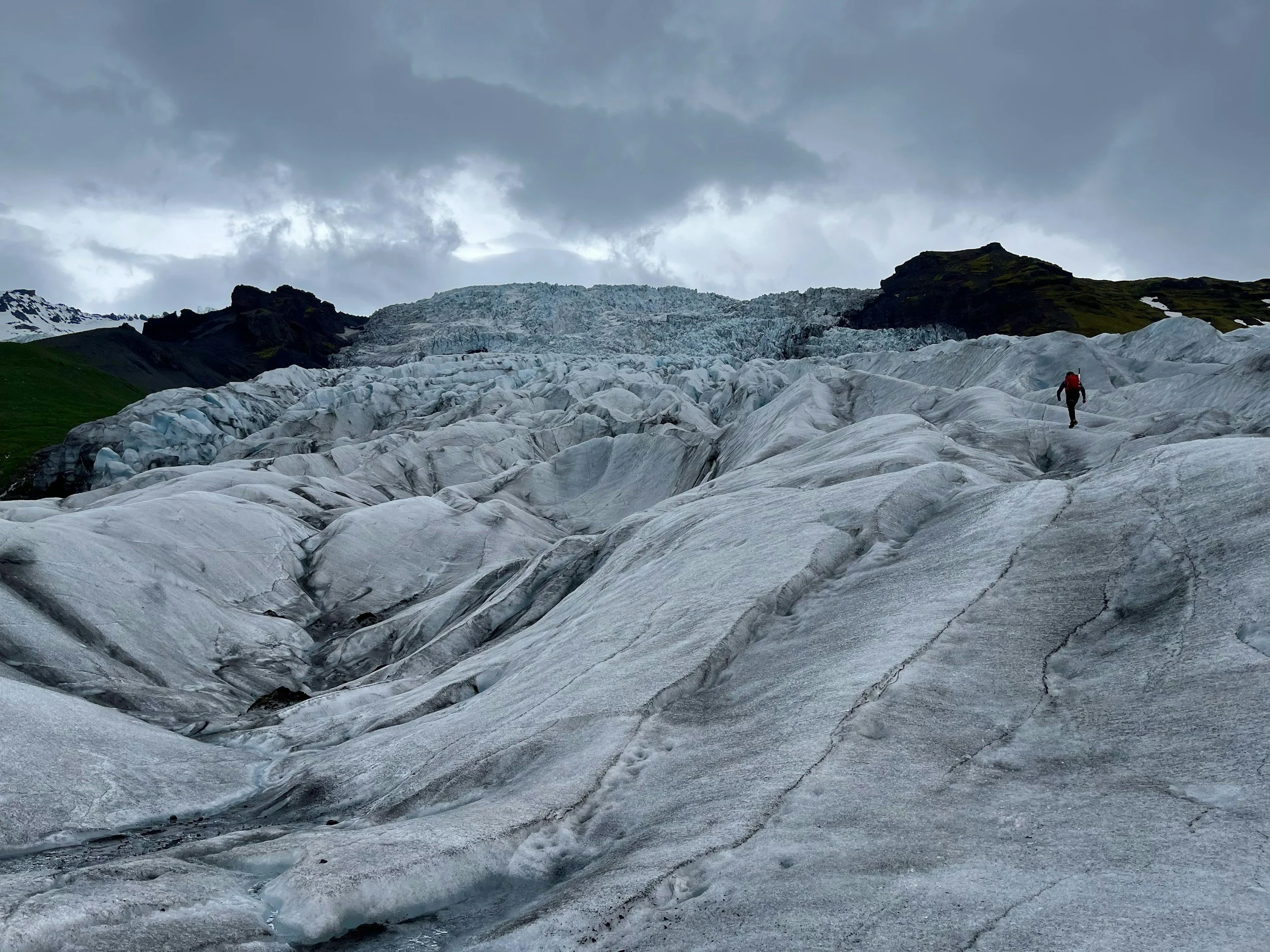
Crevasse Rescue Curriculum
Morning – Foundations
Introduction to glacier hazards and rescue priorities
Essential knots: clove hitch, prusik, klemheist, autoblock, overhand, figure-8
Rope systems overview: what you carry, how it’s deployed
Anchor review (adapted to venue — skis, packs, trees, or artificial anchors in a park)
Mid-Morning – Hauling Systems & Practice
Constructing basic rescue setups:
Drop loop system
3:1 Z-pulley
Adding Mechanical Advantage
Hands-on reps: rotating through stations to build and test systems
Scenario drills: partner “falls” into a simulated crevasse (using slope, snowbank, or flat-ground mock-up)
Afternoon – Rescue Scenarios
Team-based rescue practice: hauling with multiple rescuers, communication, and efficiency
Solo rescue considerations: ascending rope to assist partner, load transfer techniques
Improvised solutions: using skis, poles, packs, or vehicles (parking lot venue) as anchor points
Final group scenario: full rescue simulation from start to finish, with rotating roles
Wrap-Up & Debrief
Review of systems and key takeaways
Discuss limitations of practice venues vs. real glacier terrain
Next steps for continued training (glacier field practice, advanced crevasse rescue)
Individual feedback from guides
Key Skills Learned
Tying and applying key knots & hitches for crevasse rescue
Building and using simple pulley/hauling systems
Anchoring principles in snow, dirt, or improvised terrain
Solo and team-based rescue strategies
Problem-solving in limited-resource scenarios