Intermediate Ski Mountaineering Camp
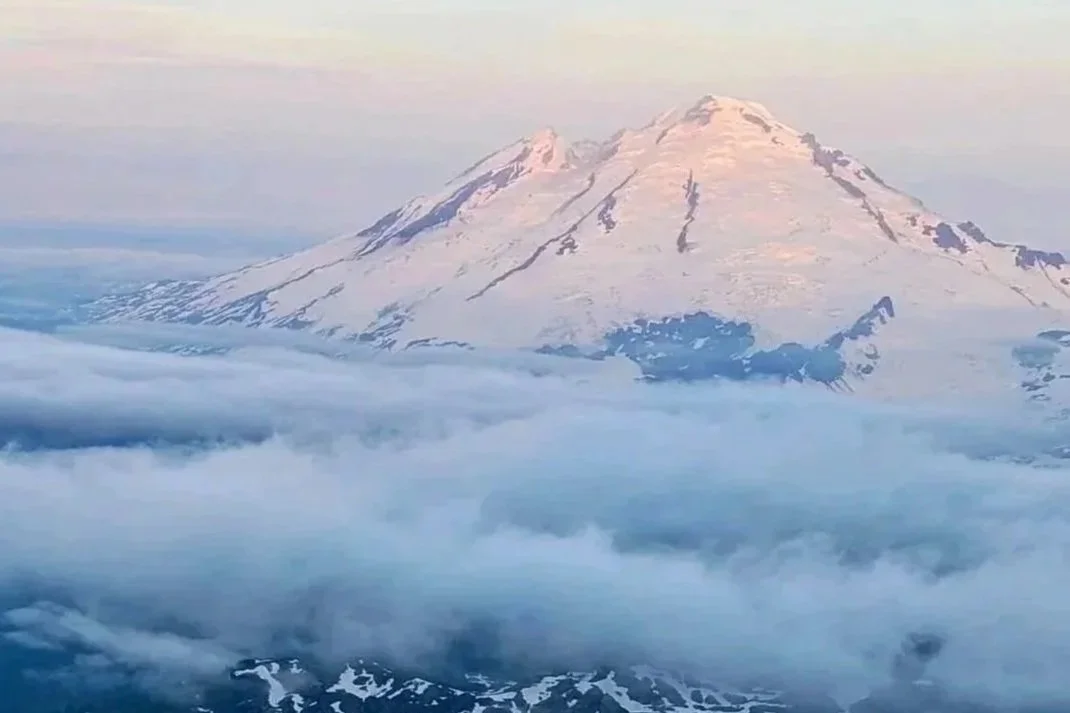
-Mount Baker, WA-
5 Day Ski & Splitboard Mountaineering Camp
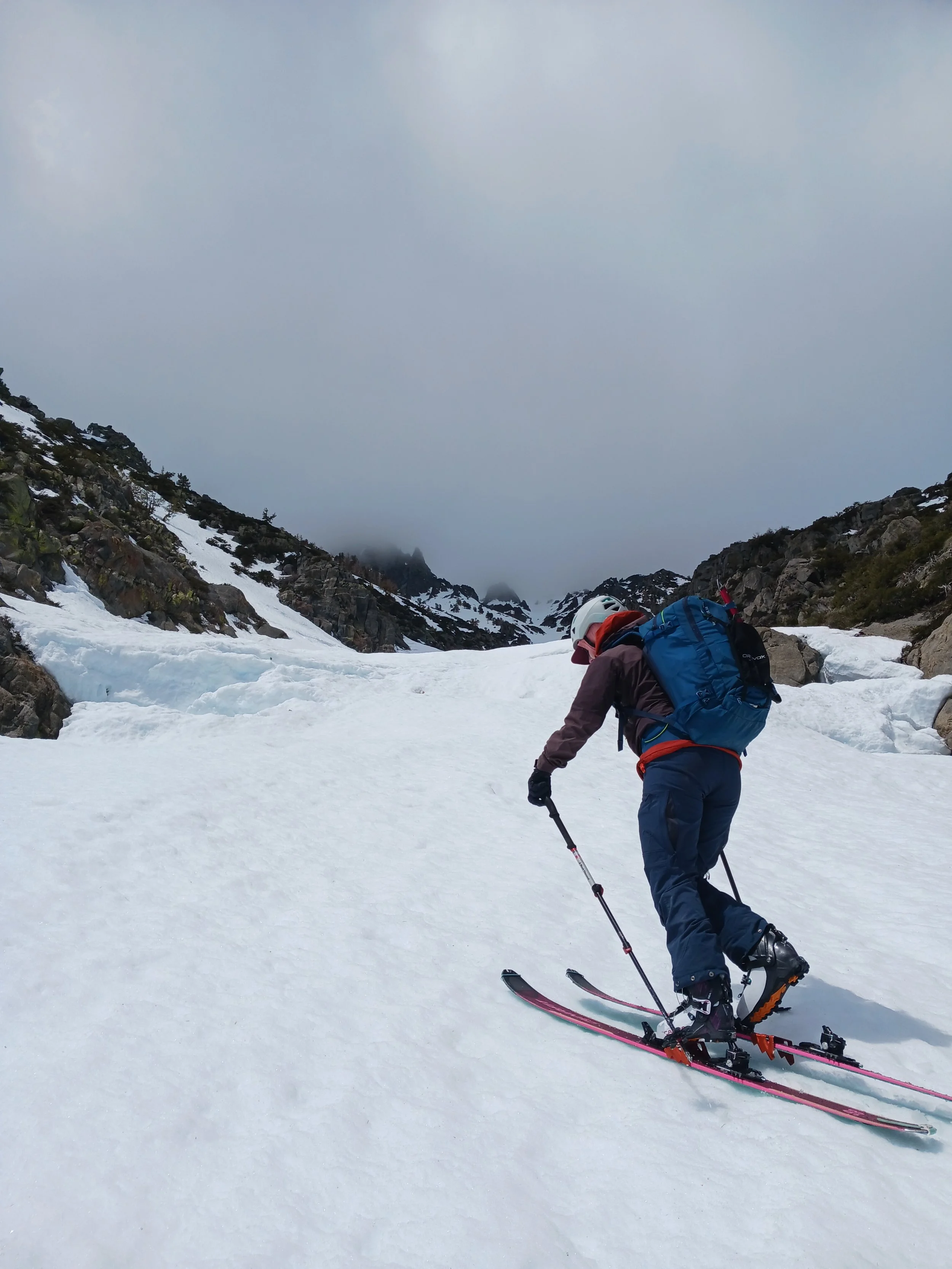
Our 5 day Mt. Baker ski mountaineering program is designed for skiers and splitboarders ready to take their backcountry travel into more technical alpine terrain
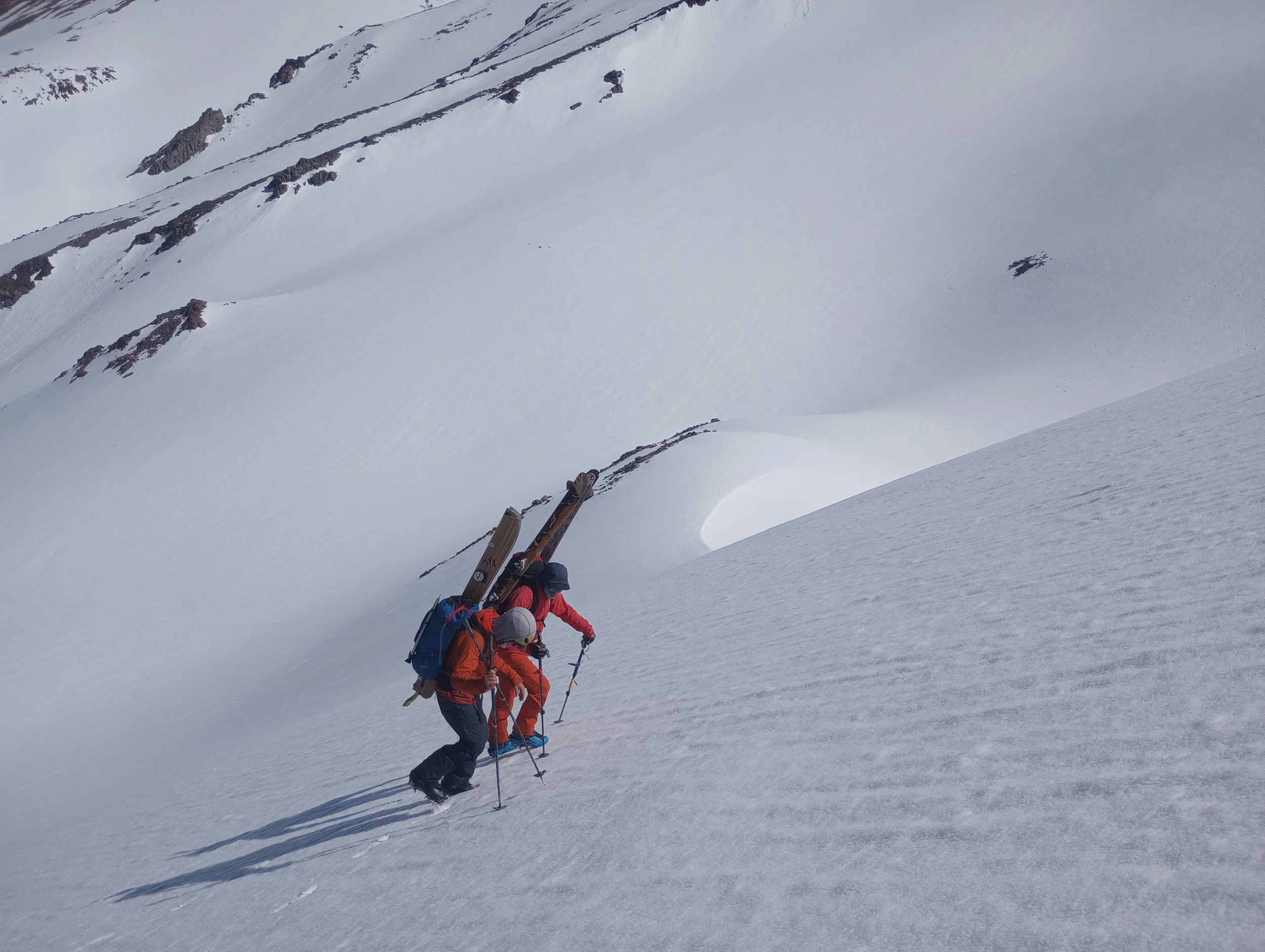
Using the accessible slopes and varied conditions of Baker as our training ground, we build a strong foundation in crampon and ice axe use, efficient climbing and descending on firm snow, and safe movement in steep environments.
Each day blends hands-on practice with decision-making exercises, emphasizing mountain sense, creativity, and the judgment required to travel with confidence in bigger terrain.
We’ll emphasize ropes for glacier travel too. This program keeps the focus on essential skills and practical application—ideal for riders preparing for large missions, longer expeditions, or simply seeking greater freedom and safety in the alpine.
-
Goals:
Skills development: Hone in on key backcountry ski & splitboarding techniques such as steep snow climbing, navigation, and downhill riding. Focus on efficient transitions to maximize time moving.
Winter Basecamp Management: Learn how to build a comfortable, livable, bad ass basecamp just like the movies!
Safety Understanding: Recognize objective hazards, assess snow conditions, and learn techniques for reducing risks as well as group management and decision-making in the mountains.
Navigation Skills: Gain proficiency in using maps and GPS for planning and navigating in backcountry areas.
Environmental Knowledge: Understand environmental care and leave-no-trace practices to reduce impact on nature.
Outcomes:
Technical Skills: Participants will be able to navigate different terrain with skis or splitboards, including uphill travel and controlled descents.
Safety Skills: Learn how to evaluate risks associated with moving trough dynamic alpine environments.
Trip Planning: Learn how to plan and execute backcountry trips, using navigation tools and assessing weather and snow conditions.
Confidence Boost: Gain confidence exploring backcountry areas, develop necessary skills and knowledge through hands-on practice.
-
Day 1: Pre-Trip Preparation, Hike In, Set Up Camp
Day 2: Learning Objective
Day 3: Learning Objective
Day 4: Learning Objective
Day 5: Morning Tour & Ski Back to Trailhead
-
Backcountry Splitboard Experience:
Participants should have prior experience backcountry ski or splitboarding, including proficiency with skinning, uphill travel, and transitions.
Ability to ride confidently in variable snow conditions on ungroomed terrain.
Physical Fitness:
A high level of fitness is required to endure sustained physical effort, including multiple days of uphill travel, carrying a heavy pack in challenging terrain.
Participants should be capable of 6–8 hours of continuous activity per day with elevation gains of 3,000–5,000 feet.
Essential Gear and Skills:
Participants should bring appropriate backcountry ski & splitboard equipment, including alpine touring skis, splitboard, bindings, skins, boots, poles, and avalanche safety gear.
Ability to efficiently manage gear transitions.
Comfort in Cold and Remote Environments:
Willingness to spend consecutive nights in the backcountry potentially in harsh weather conditions, with the bare alpine necessities of life.
Solid Teamwork & Communication Skills:
A collaborative mindset, adaptability, and a willingness to work as part of a group are essential for a successful expedition experience.
-
Included:
Friendly AMGA trained ski & splitboard guides.
Applicable recreation and/or forest service permits.
Group rescue gear, first aid, rescue sled, GPS/Satellite phone.
Waste Disposal Bags in compliance with “Leave No Trace” principles.
4 season tents
Ropes
Stoves
Fuel
Pots & pans
Water storage & treatment
Not Included:
Ski/splitboard touring equipment.
Avalanche equipment, ice axe, crampons, harness, carabiners.
Food/Snacks/Meals
Transportation
Guide Gratuities
Skills Covered
Ice axe & crampon techniques for steep snow
Glacier travel systems & hazard recognition
Rope work: knots, anchors, running belays, team travel
Crevasse rescue (theory and hands-on practice)
Steep skiing/riding tactics in glaciated terrain
Expedition camping, kitchen systems & efficient camp craft
Leadership, communication & decision-making on big mountain objectives
Day 1 – Gear Check & Approach to Camp
Morning meet-up in Sedro-Woolley or Glacier, WA
Drive to our designated trailhead
Ski/hike to establish high camp (~6,500–7,000 ft on Easton Glacier or Coleman Glacier approach)
Instruction en route: efficient skinning with expedition packs, kick turns, pacing strategies
Afternoon session: campcraft & snow camping systems (tent platforms, kitchens, water melting)
Evening orientation: terrain overview, course goals, and Leave No Trace principles
Day 4 – Crevasse Rescue & Leadership on the Glacier
Hands-on crevasse rescue practice:
Arresting a fall into a crevasse
Building anchors and hauling systems (Z-pulley and variations)
Team coordination in rescue scenarios
Afternoon tour higher on glacier to taper off a day of learning
Evening prep: review for summit push
Price: $1,540.00
Dates: TBD
Day 2 – Ice Axe, Crampons & Efficient Movement
Skills focus:
Ice axe use (grip & self arrest)
Crampon techniques
Boot packing transitions with skis/splitboards on pack
Practice on progressively steeper slopes near camp
Afternoon ski/ride descent emphasizing line choice and efficient downhill travel
Evening camp session: expedition stove & cooking systems
Day 5 – Summit & Ski/Ride Descent
Alpine start (~1–3 a.m.) for summit attempt via Easton Glacier or Coleman-Deming route
Summit attempt of Mount Baker (10,781 ft), weather/conditions permitting
Ski/splitboard descent from high on the route, emphasizing safe line choice and group management
Return to camp, pack up, and ski out to trailhead
Final debrief: Course recap & feedback
Day 3 – Rope Systems & Glacier Travel
Technical instruction:
Knots & hitches for ski mountaineering
Rope spacing & team management for glacier travel
Running belays & snow anchors (pickets, skis, axe)
Scenario practice: simulated glacier travel and hazard recognition
Afternoon ski descent
Evening workshop: crevasse rescue systems overview