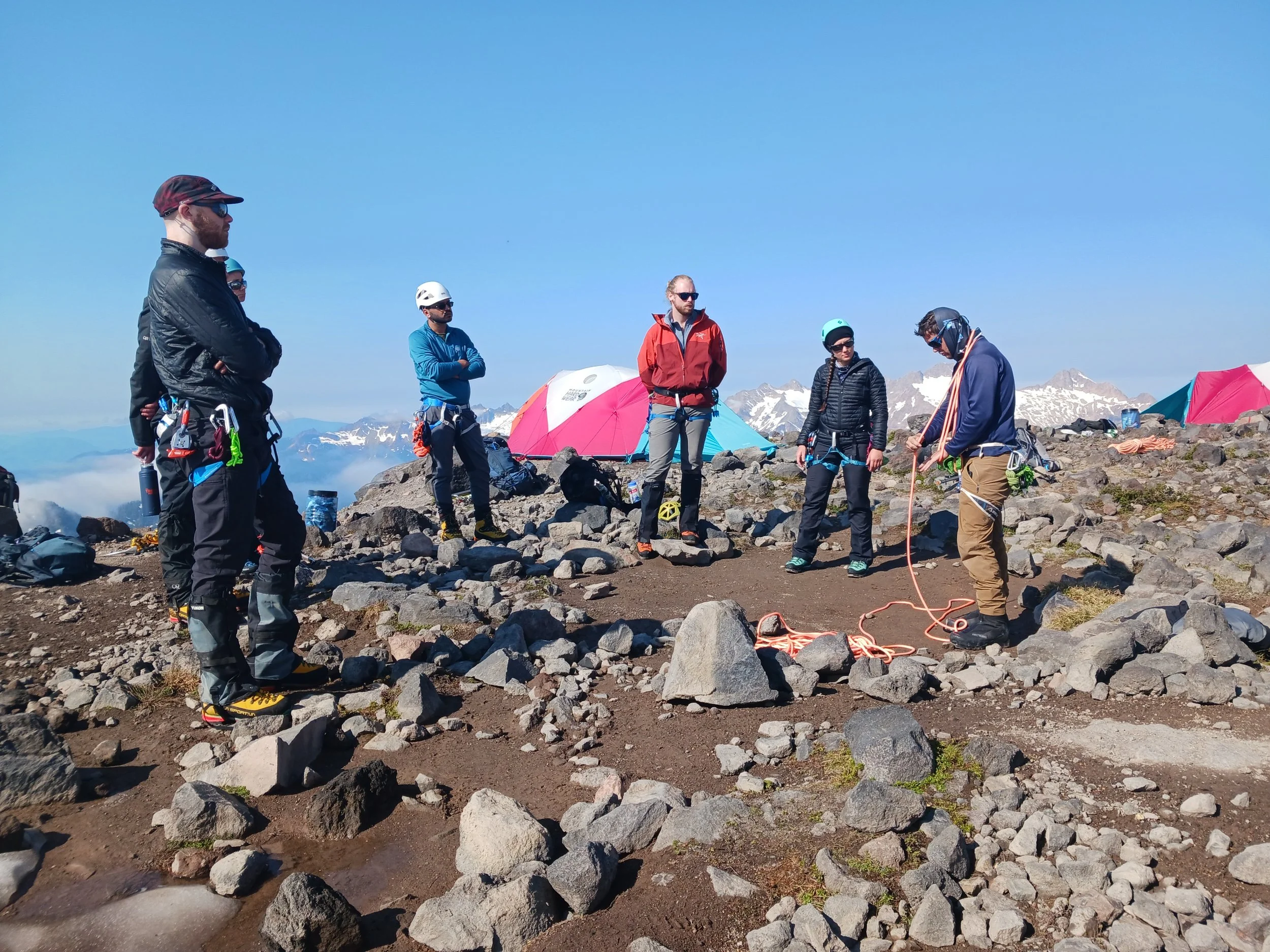
3-Day Alpine Skills Course
The 3-Day Alpine Skills Course is designed for climbers, skiers, and backcountry travelers who want to take their mountain travel to the next level. This program builds a strong foundation of technical skills, movement efficiency, and mountain decision-making the key ingredients for safe and confident alpine climbing.
Over three immersive days in the high Sierra, participants learn hands-on techniques for snow and rock travel, rope systems, anchors, navigation, and hazard management. Whether you’re preparing for your first major peak, transitioning from hiking to mountaineering, or building skills for bigger expeditions, this course gives you the competence and confidence to move independently in alpine terrain.
Our certified guides emphasize clarity, repetition, and real-world practice helping you progress beyond basic instruction to truly understand how to think and operate like a mountaineer.
Price: $750.00
Dates:
-
Goals
Learn essential alpine travel techniques
Understand basic snow and glacier movement skills
Build competence with crampons, ice axe, and rope systems
Develop safe decision-making in alpine terrain
Outcomes
Move confidently on snow, ice, and mixed terrain
Perform basic rope work, knots, and belay systems
Use crampons and an ice axe effectively
Apply simple navigation and hazard-management skills
Feel prepared for beginner-level alpine objectives
-
Day 1
Morning: Introduction to alpine gear and equipment; basic knots and rope management
Afternoon: Movement, efficiency, self-arrest practice on snow slopes
Evening: Route planning and hazard assessment discussion
Day 2
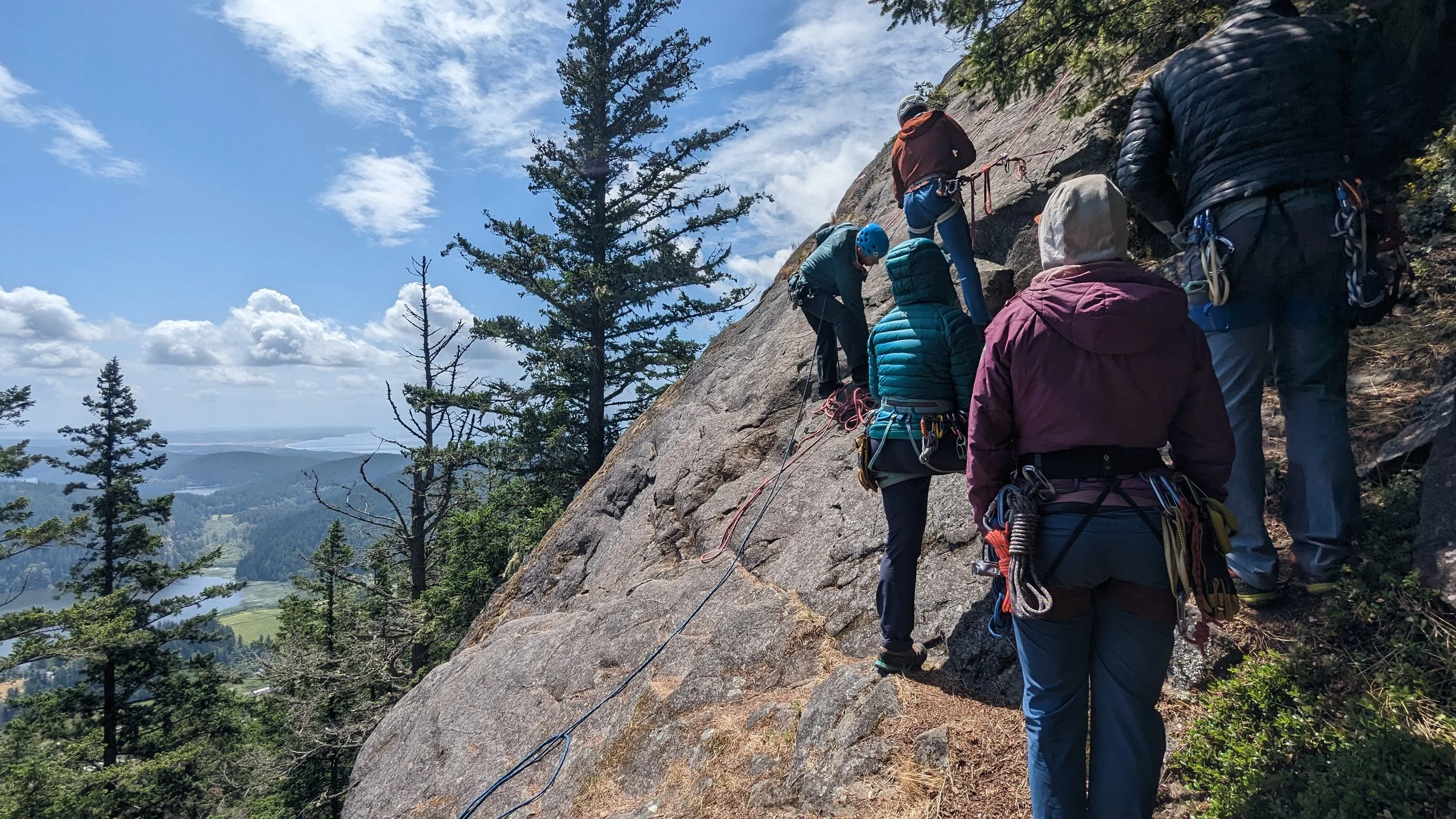
Morning: Snow/Rock Anchors
Afternoon: Ice axe and crampon use; travel on mixed terrain
Evening: Navigation skills with map and compass
Day 3
Morning: Team travel dynamics; belaying & rappelling basics
Afternoon: Course wrap up & hike back to trailhead
-
Endurance: Mountaineering involves long ascents over varied terrain. A good cardiovascular base is crucial.
Strength: A focus on leg strength, core stability, and overall muscle conditioning will help you navigate uneven slopes with the weight of a mountaineering pack on.
Fitness Level: Participants should have a solid fitness foundation and prior hiking experience in mountainous terrain.
Team work & Communication Skills: Joining a guided trip is an excellent way to gain the necessary communication skills so you are held accountable for pulling your own weight by contributing to the teams decision making.
-
Friendly AMGA trained guides.
Applicable recreation and/or forest service permits.
Group rescue gear, first aid, GPS.
Waste Disposal Bags in compliance with “Leave No Trace” principles.
Tents
Ropes
Stoves
Fuel
Pots & pans
Water storage & treatment
Not Included:
Mountaineering boots, ice axe, crampons, helmets, harness, carabiners.
Food/Snacks/Meals
Transportation
Guide Gratuities
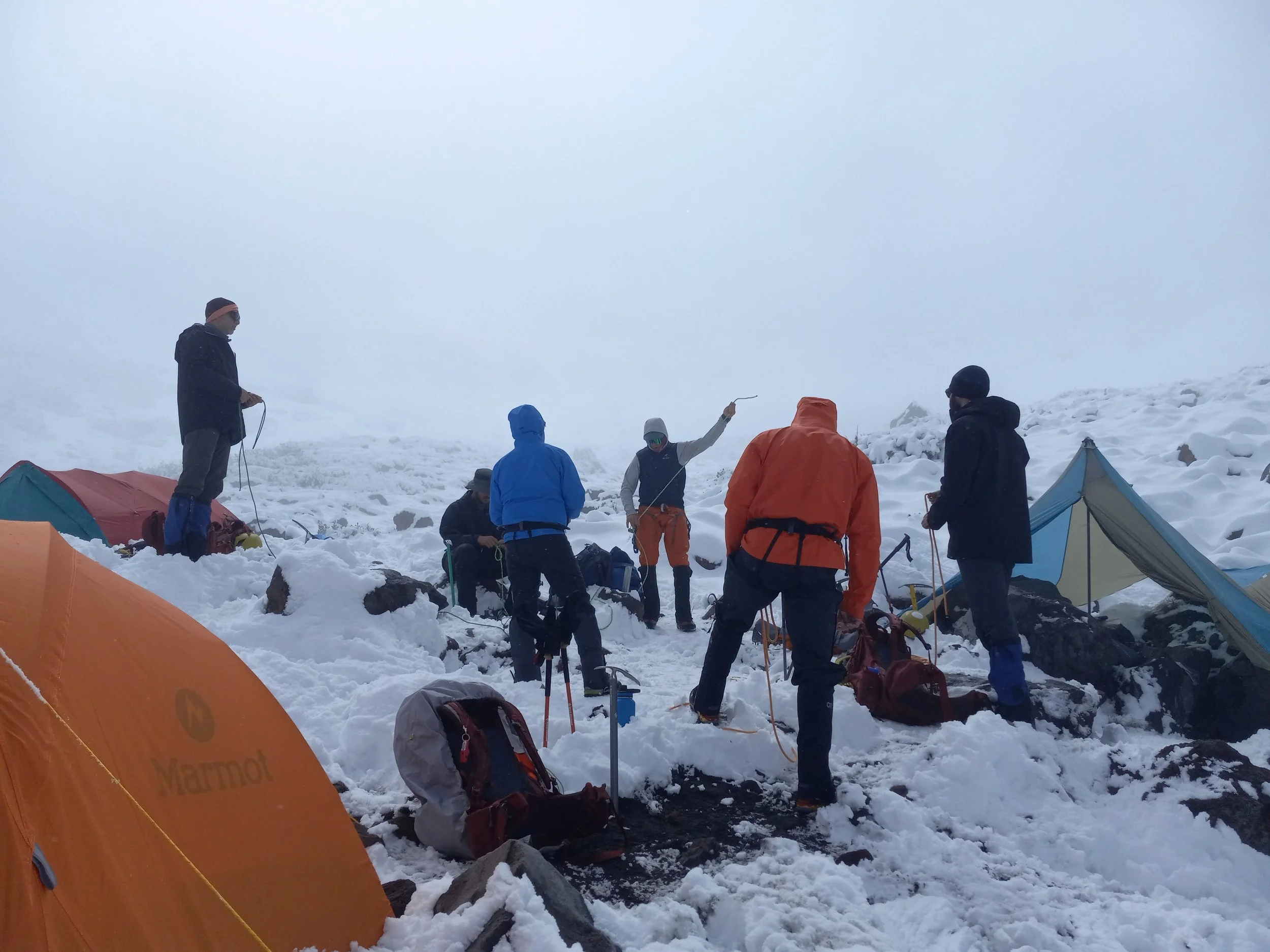
Day 2 – Technical Systems & Terrain Management
Location: Mixed snow and rock terrain
Morning:
Rope management and knots for alpine climbing
Belay techniques: hip belay, terrain belay, and transitions
Building rock and snow anchors in alpine conditions
Afternoon:
Short-roping and short-pitching techniques
Transitions between snow and rock
Efficiency and communication in the alpine environment
Evening (optional camp session):
Introduction to crevasse rescue concepts
Case studies and discussion: mountain decision-making under pressure
Focus: Applying technical systems to real alpine scenarios.
Day 3 – Alpine Objective & Practical Application
Morning:
Pre-dawn start and alpine ascent planning
Route navigation, rope management, pacing, and group leadership
Anchor transitions and protection placement on the go
Afternoon:
Summit push or simulated objective
Descent and self-reliant travel practice
Debrief: personal progression and next-step planning
Focus: Applying everything learned to a real alpine route — teamwork, movement, and decision-making.
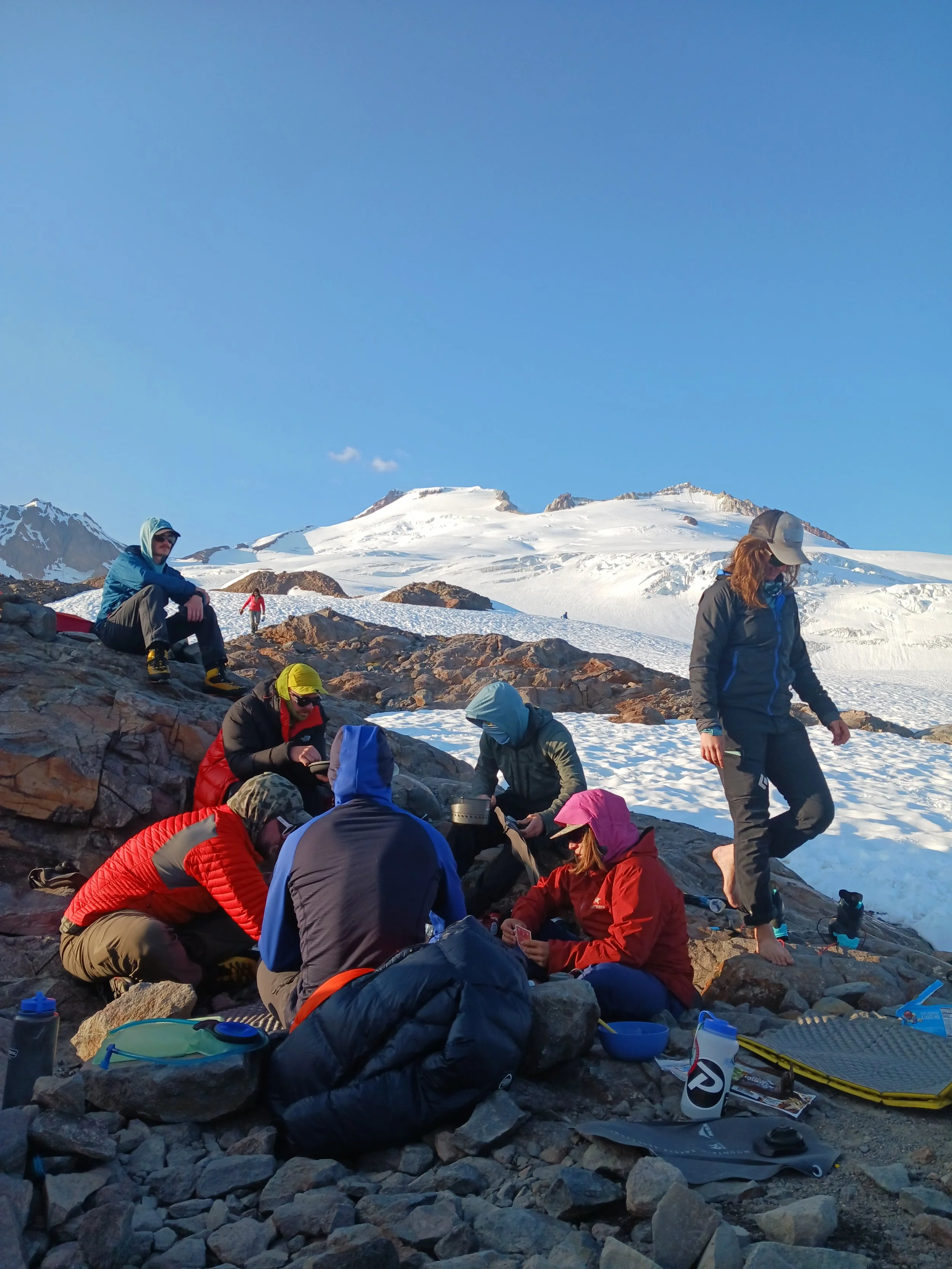
Day 1 – Fundamentals of Alpine Movement & Safety
Morning:
Orientation, gear review, and packing systems
Footwork and movement on snow: step kicking, plunge stepping, and edging
Ice axe use and self-arrest practice
Crampon technique and movement efficiency
Afternoon:
Introduction to rope systems and team travel
Snow anchors: pickets, buried tools, and bollards
Building awareness of mountain hazards: weather, timing, terrain traps
Evening (optional camp session):
Navigation fundamentals (map, compass, terrain reading)
Alpine trip planning and risk management discussion
Focus: Foundation of movement, safety, and mindset for alpine travel.