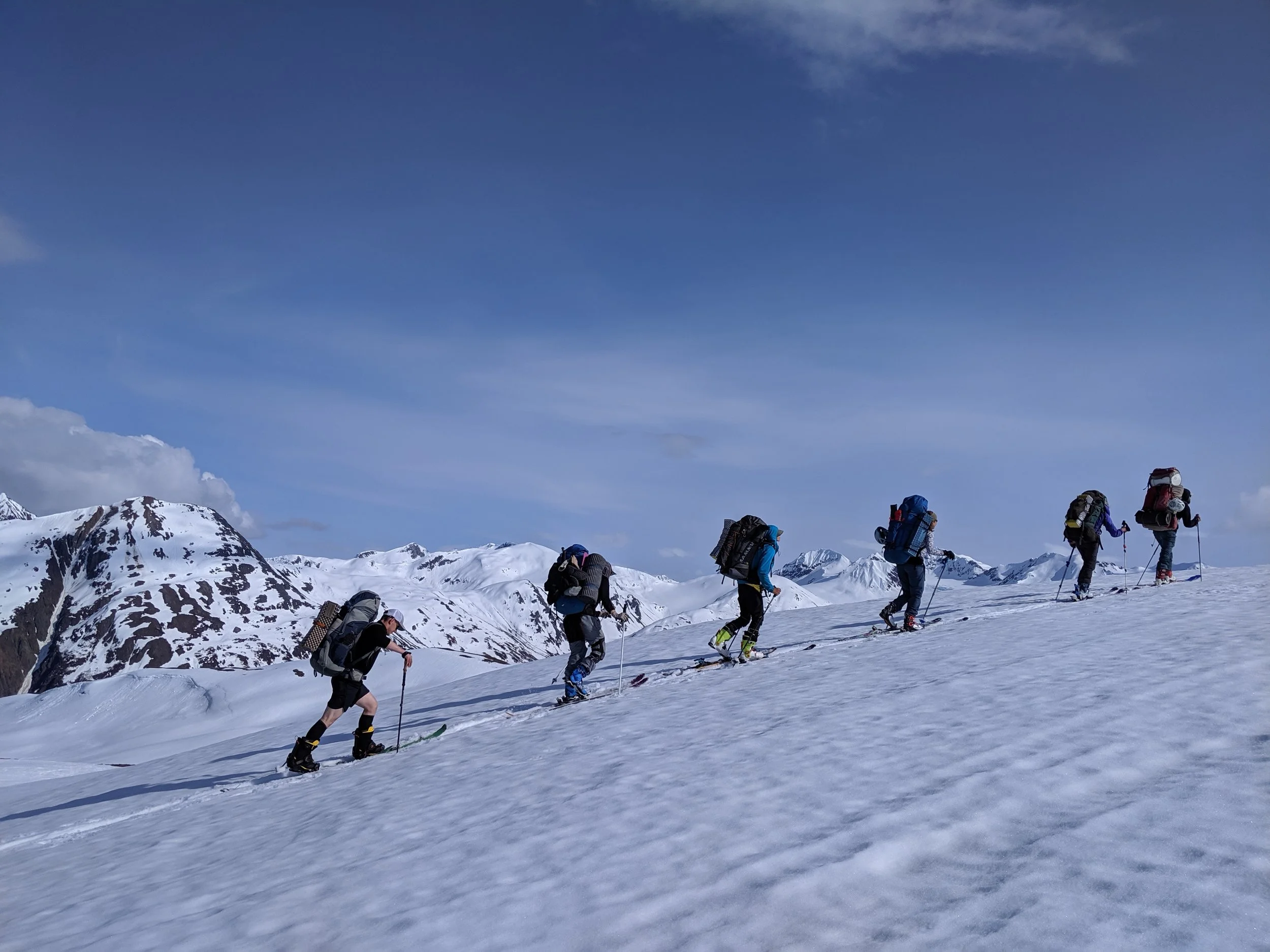
Crevasse Rescue Course for Skiers & Riders
3 Day - Crevasse Rescue Course
Our 3-Day Crevasse Rescue Course is designed for mountaineers, ski mountaineers, and alpinists who want a comprehensive, confidence building deep dive into glacier travel and rescue systems. The extended three day format allows us to go far beyond the basics, giving participants the time to refine rope systems, practice real world rescue scenarios, and truly understand the principles behind safe glacier travel and crevasse extraction.
Over the course of three full field days, you’ll gain both technical proficiency and practical experience in team and solo rescue techniques. With ample time to build repetition and muscle memory, participants develop efficiency under pressure, a crucial skill in high stakes environments. Each day builds intentionally on the last, progressing from fundamental knots and systems to complex rescue setups and multi-person scenarios.
Price: $600.00
Dates: TBD
Why 3 Days Matter
You’re not just running one high-intensity “use it or lose it” session — instead you spread out learning over multiple terrain types and scenarios, which builds retention and skill.
Day-by-day progression: starting with fundamentals, progressing to practiced drills, culminating in full-scenario integration.
More time = more realistic simulation: bigger terrain, more fatigue, more variables (snow conditions, weather, mixed terrain) — which means you’re better prepared for real-world glaciated routes.
Opportunity for reflection, debrief and adjustment: after Day 1 you can identify weak areas; Day 2 you rehearse them; Day 3 you execute with more confidence.
Team building and muscle memory: the repeated drills allow your body and decision-making to sync up, making responses in an actual incident faster and more automatic.
Day 1 – Base setup, fundamentals & terrain introduction
Gather in the morning: gear-check, review of equipment for glacier travel and rescue.
Warm-up with basic glacier travel: rope-team techniques, self-arrest, crampon/ice-axe use, travel on snow/ice, hazard awareness.
Introduce anchor systems (snow anchors, ice anchors, mixed terrain), knots, hitches, basic hauling/raising concepts.
Afternoon or evening: move to base camp (if overnight style) or up onto glacier terrain; assess terrain, set up a temporary classroom on the snow/ice.
Debrief: day’s learnings, what to improve, preview of next day’s advanced drills.
-
Course Goals
Learn safe glacier travel applicable to skiers & riders
Build partner rescue and self-rescue skills
Introduce winter snow camping skills
Improve communication and teamwork in glaciated terrain
Build confidence operating in multi-day winter environments
Learning Outcomes
Build secure snow anchors
Arrest and manage crevasse falls
Use 3:1, 5:1, and drop-loop hauling systems
Perform full partner rescue scenarios
Ascend ropes for self-rescue
Choose and build safe winter camps
Make informed decisions about travel, weather, and terrain
Communicate clearly during travel and rescue situations
Operate effectively on a multi-day glacier-based trip
-
Day 1
Meet at trailhead and review gear
Skin to camp and set up snow camp
Intro to glacier travel & rope teams
Basic snow anchors and rescue fundamentals
Day 2
Practice full crevasse rescue systems
Hauling practice (3:1, 5:1, direct haul & drop loop)
Self-rescue rope ascension
Evening camp routine and skills
Day 3
Final rescue scenarios and team drills
Break down camp and return to trailhead
Course debrief and next steps
-
Intermediate - advanced riding skills - Should be comfortable linking clean turns down a black diamond run at ski areas.
This is an introductory course - No previous backcountry ski touring experience required experience.
Basic - Moderate fitness level - Through the day, we will be covering anywhere from 1,150 - 2,000 vertical feet over the course of the day. You should be capable of performing this at a slow & steady pace.
Arrive with proper equipment - You must provide yourself with the equipment displayed below in the gear list. If you do not own something, you can either rent from us or rent from a local shop.
-
Included:
Friendly AMGA trained guides
Applicible recreation & forest service permits
Ropes, snow protection, group training gear
Group first aid & GPS communication devices
Waste Disposal bags in compliance with Leave “No Trace Principles”
Tents
Stoves / Fuel
Not included:
Crampons, ice axe, harness, carabiners
Beacon, Probe, Shovel
Food & Snacks
Transportation
Guide Gratuities
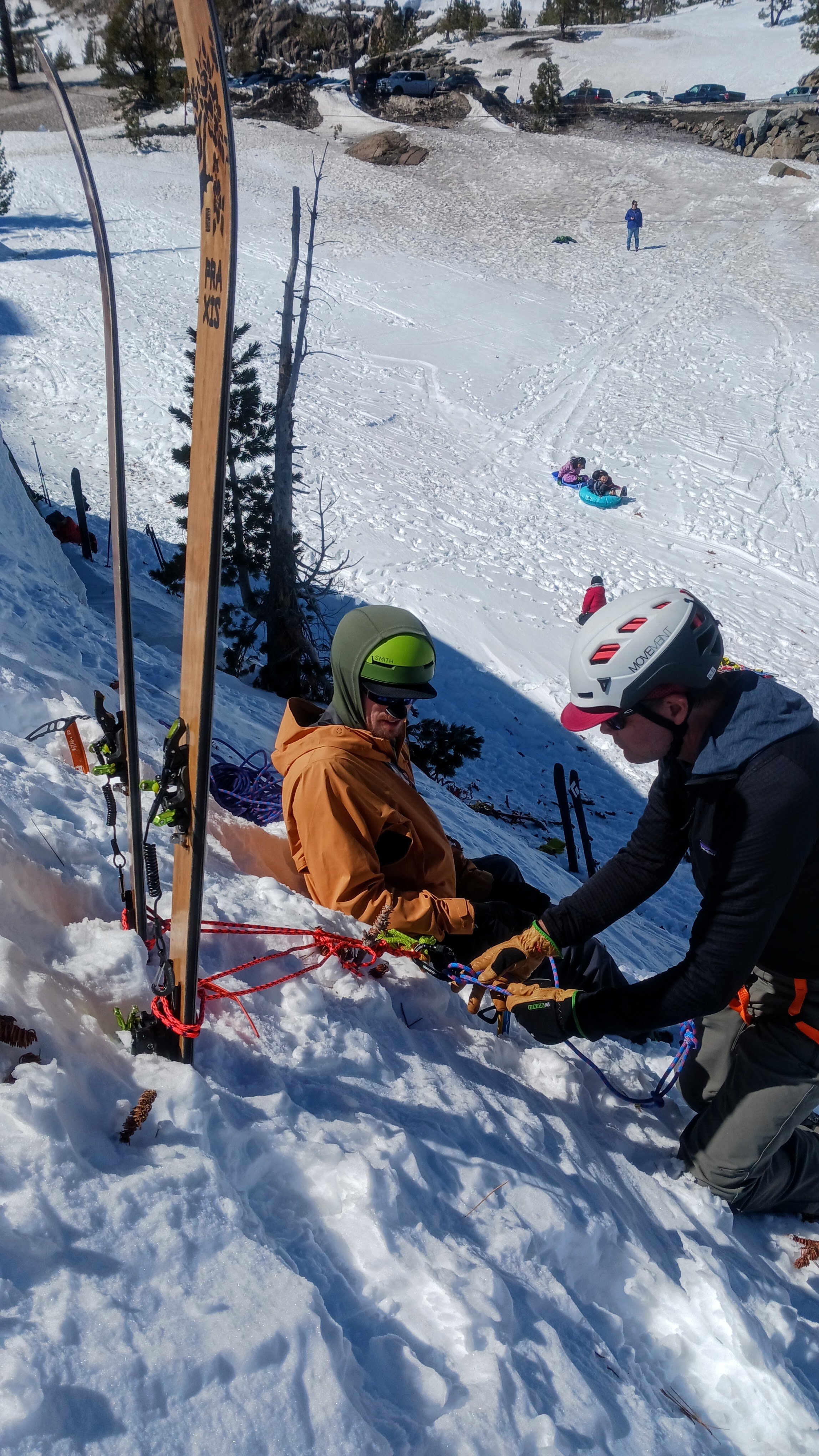
Day 2 – Intensive practice & scenario drills
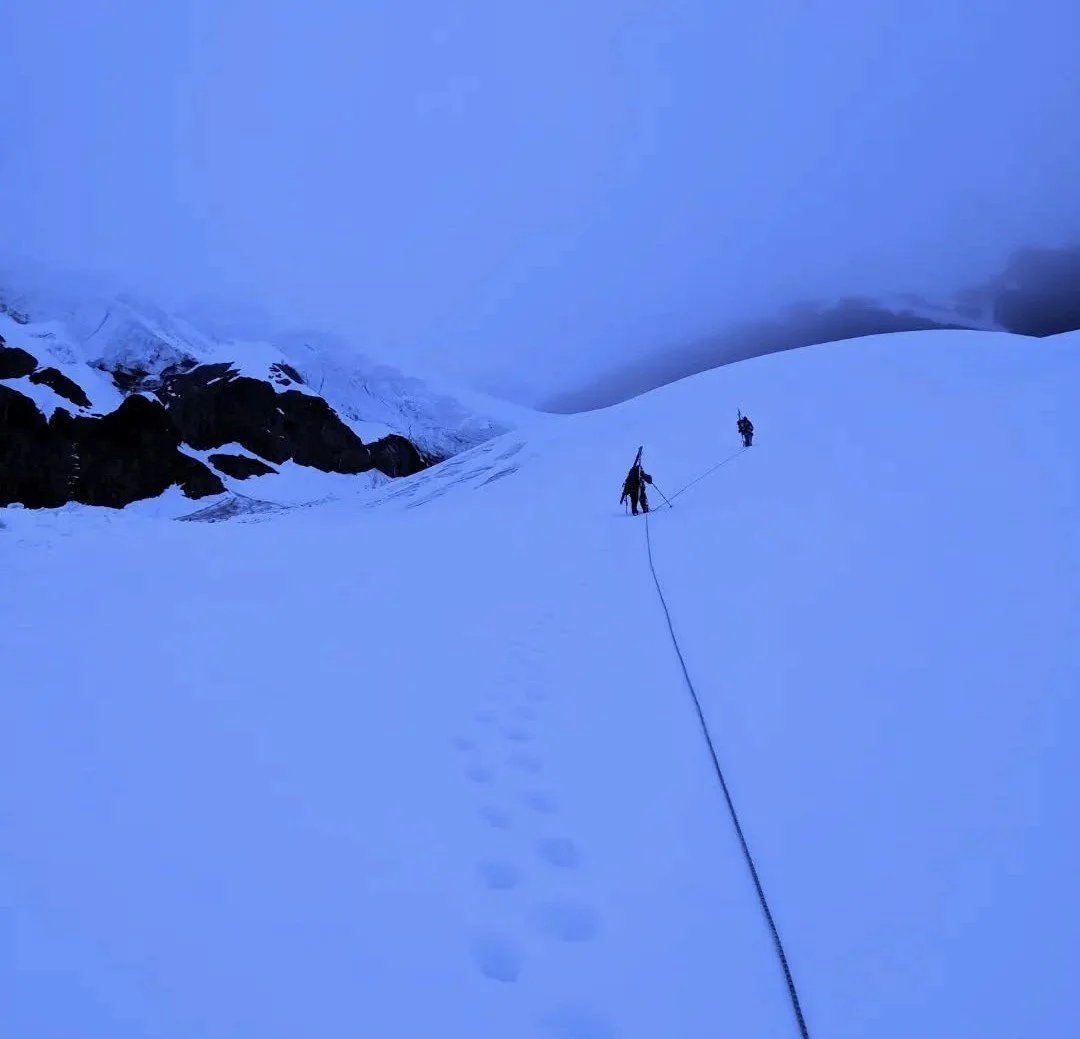
Early start: full day in glaciated terrain under real or simulated conditions (crevasses, snow bridges, varying slopes).
Focused drills: rope-team travel across crevassed terrain, recognizing hazards, safe spacing, anchor building under fatigue/less ideal conditions.
Hauling/raising systems: set up simple and compound mechanical advantage systems (3:1, 5:1, Z-pulley etc), transfer loads, simulate a casualty hanging.
Self-rescue elements: victim ascending, prusiks, rope-ascension, as well as team rescue.
Scenario work: rescue from lip of crevasse, stabilising a victim, constructing anchors in tricky positions, hauling out packs/injured climber.
Evening debrief: what worked, what didn’t. Adjust gear, refine techniques.
Day 3 – Consolidation, advanced variations & exit
Morning: revisit key weak points identified from Day 2 — perhaps more difficult terrain (steeper ice, complex crevasse lips, large loads).
Full scenario(s): simulate realistic rescue under time/fatigue pressure; perhaps include unexpected element (injured team member, worse weather, pack snag, deeper crevasse).
Wrap-up anchor & rescue system variations: mixing snow + ice + rock anchors; alternative rescue systems; decision making (when to bail, when to call for external assistance).
Packing up: break camp (if overnight), descend, transition from “training mode” to “prepared mode”.
Final debrief and reflection: gear maintenance, team communication lessons, next steps for your alpine objectives.