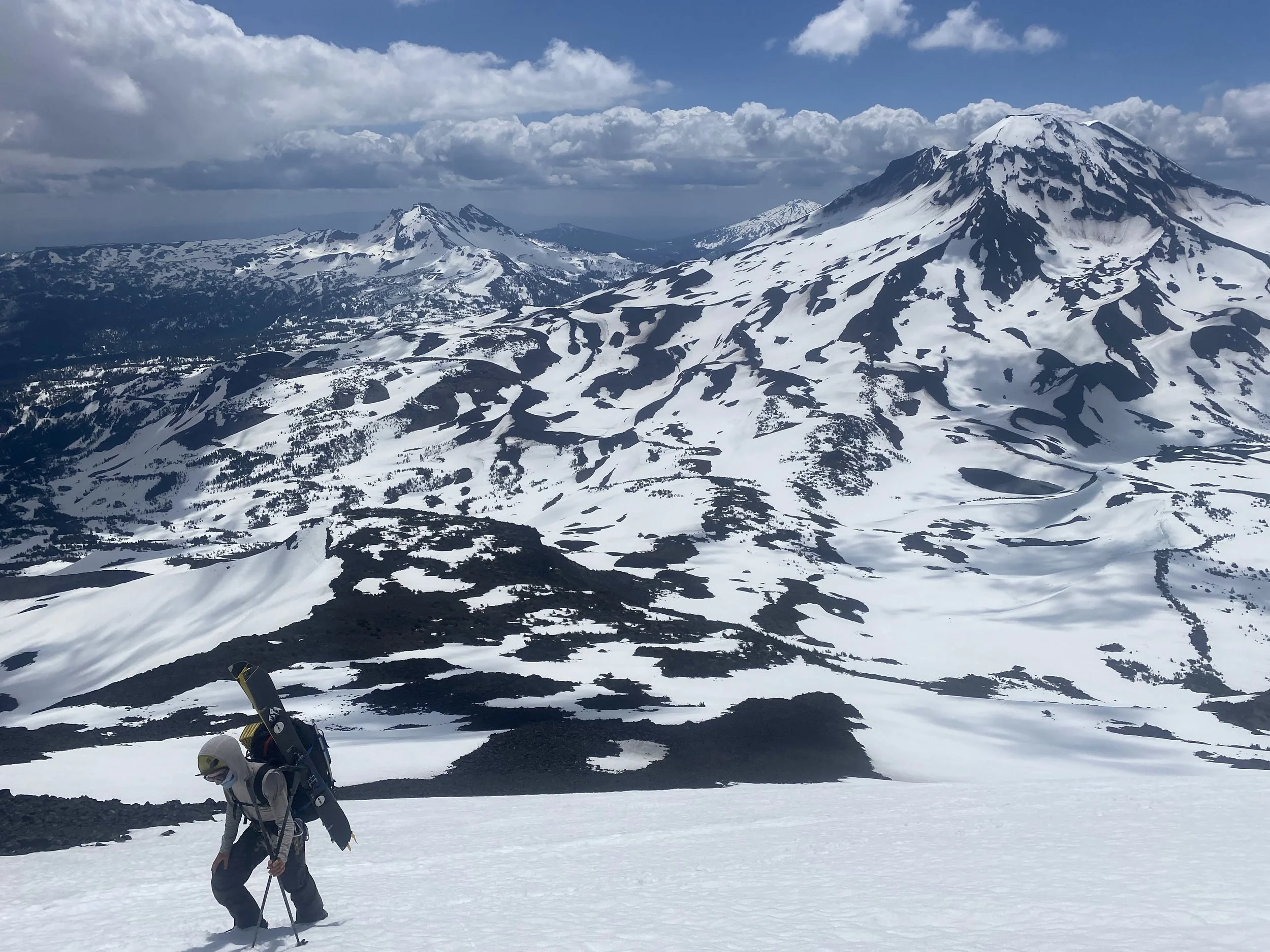
2 Day Crevasse Rescue for Skiers and Splitboarders
2 Day - Crevasse Rescue Course Overview
Join our 2-Day Crevasse Rescue Course, designed for climbers, ski mountaineers, and backcountry travelers seeking to develop practical and reliable glacier rescue skills in a focused, hands-on learning environment. This immersive program dives deep into the systems, decision-making, and technical proficiency required to perform crevasse rescues safely and efficiently.
Over the span of two full field days, participants progress from foundational concepts to realistic scenario practice. You’ll gain a clear understanding of rope team travel, snow and ice anchors, mechanical advantage systems, and self-rescue techniques, all while working under real mountain conditions.
The two-day format gives us the ideal amount of time to move beyond the basics. We can slow down and truly practice, not just demonstrate each rescue component. The first day is dedicated to building solid technical foundations and understanding how each piece of the system interacts.
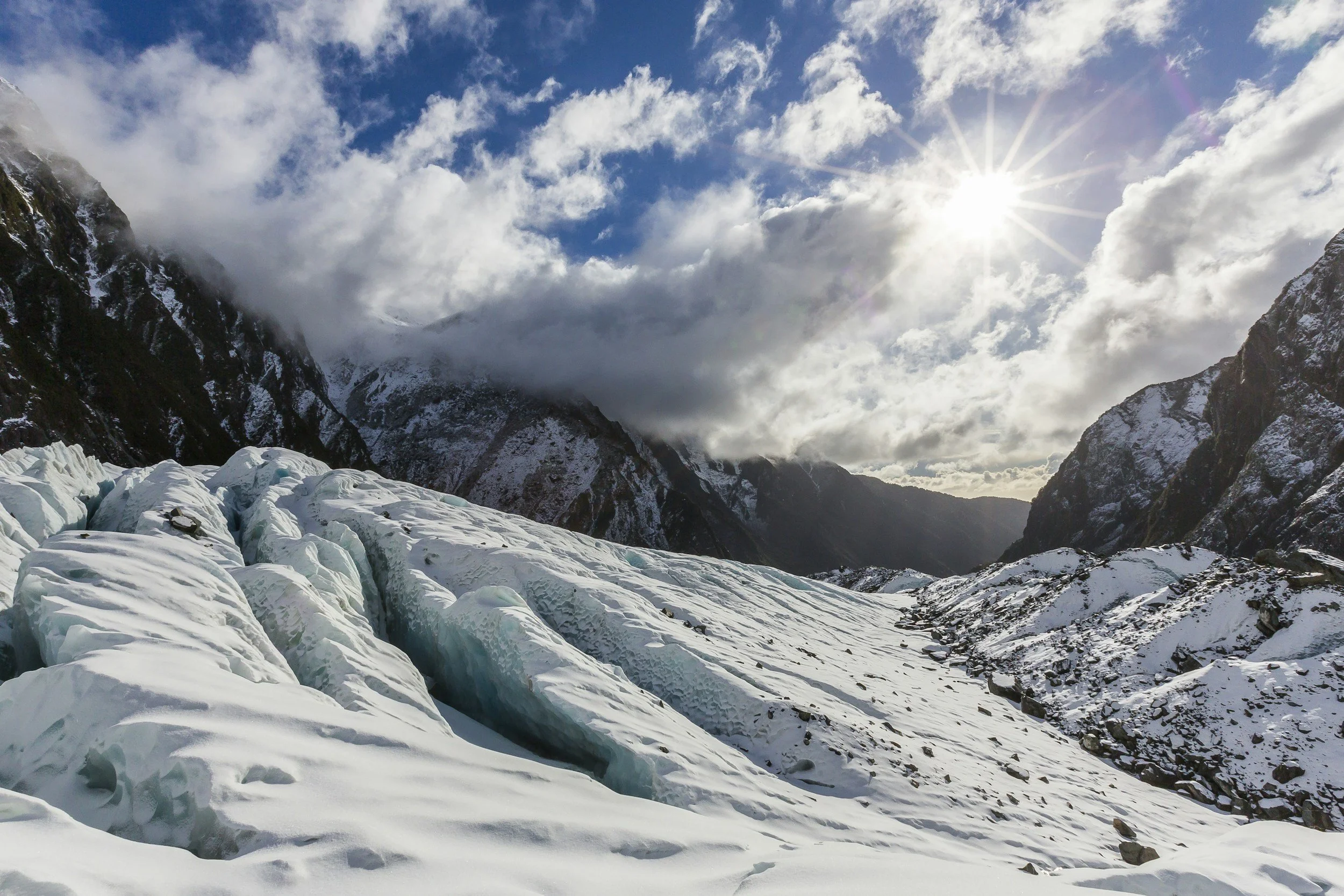
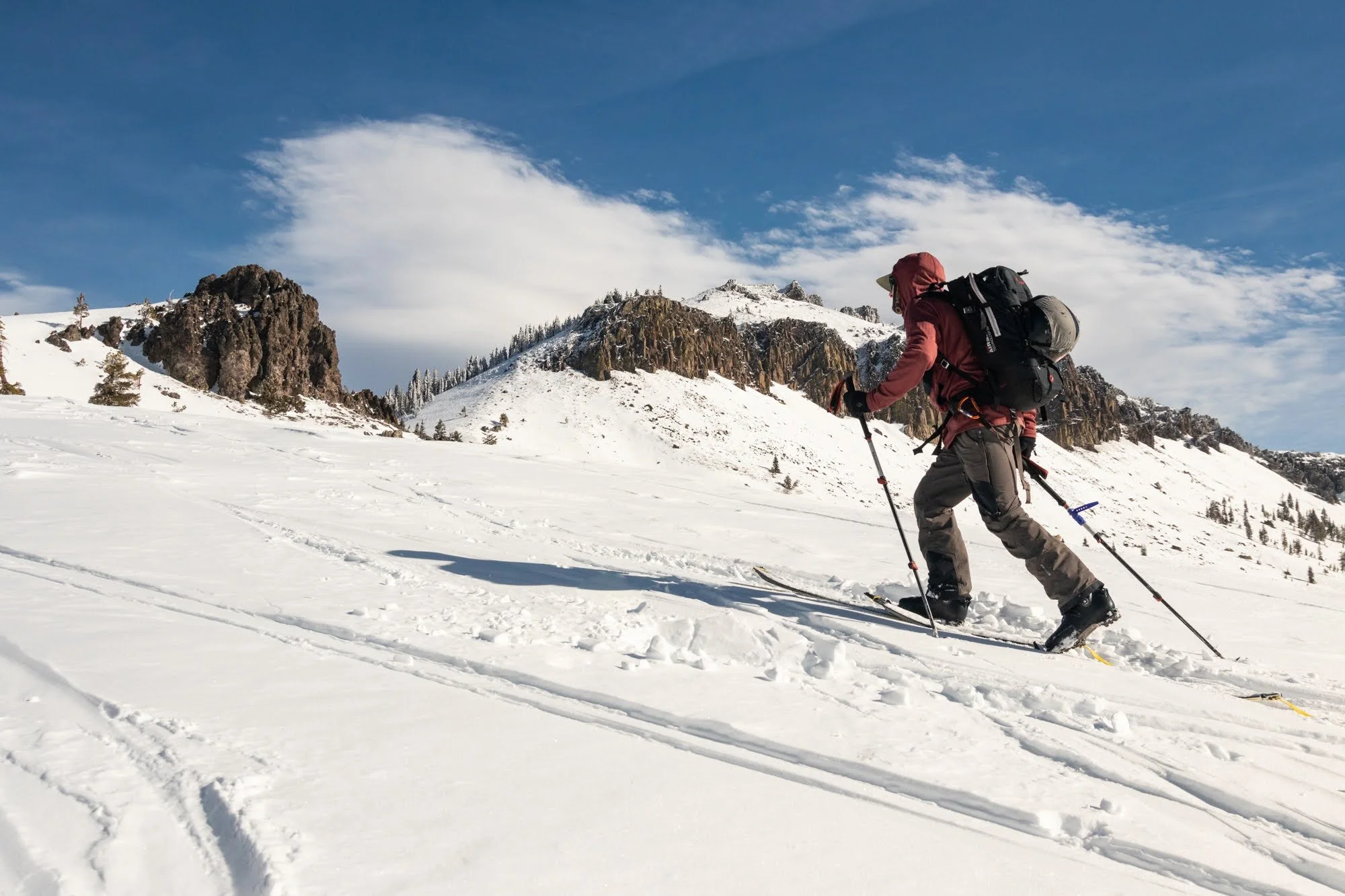
Why Two Days Matter
Two full days in the field allows participants to go beyond an introduction—developing real competence through repetition, feedback, and progression from theory to realistic application.
Day 1 builds the foundation: movement skills, anchors, knots, and basic mechanical advantage.
Day 2 enforces those systems through full scenario practice and problem-solving in realistic alpine settings.
The condensed format is perfect for those seeking a deep, focused learning experience without an extended expedition commitment.
With the right pacing and instruction, you’ll leave with the confidence to respond effectively to crevasse incidents and lead or assist in rope-team rescues.
Day 1 – Foundations & Core Systems
Morning (8:00 AM – 12:00 PM)
Introductions, course overview, and safety briefing
Glacier travel fundamentals: rope-team spacing, knots, communication, hazard identification
Equipment overview: ropes, pulleys, prusiks, ice screws, pickets, and snow protection
Anchor building: snow and ice anchors for rescue applications
Afternoon (12:30 PM – 4:30 PM)
Load testing anchors and assessing strength
Knots, hitches, and rope management for rescue systems
Introduction to mechanical advantage systems (3:1, 5:1, Z-pulley)
Basic haul practice with live loads
Debrief: review and discussion of efficiency, friction, and system redundancy
-
Course Goals
Provide skiers and splitboarders with the foundational knowledge and hands-on practice needed to manage crevasse hazards in glaciated terrain.
Build competence in travel systems, partner rescue, and self-rescue techniques specific to ski mountaineering.
Develop smooth team communication, coordination, and problem-solving under realistic field scenarios.
Increase overall confidence traveling on glaciers with the ability to respond effectively to crevasse incidents.
Learning Outcomes
By the end of this course, participants will be able to:
Properly select, fit, and use glacier travel equipment (harnesses, ropes, skis/splitboards, snow anchors,pullys, prusiks, etc.).
Set up rope teams for ski mountaineering, including spacing, knots, and terrain-specific adjustments.
Perform crevasse fall response protocols, including immediate arrest, anchor building, and safe workload distribution.
Build secure snow anchors (pickets, skis, bury anchors, natural features) in a variety of conditions.
Construct and operate 3:1, 5:1, drop-loop, and direct hauling systems suitable for skier/splitboarder rescues.
Execute a complete partner haul from initial fall to surface extraction.
Perform self-rescue techniques, such as ascending the rope using friction hitches or mechanical ascenders.
Demonstrate clean, efficient rescues.
-
Day 1 – Foundations & Core Rescue Systems
Morning – Intro & Glacier Travel Skills
Meet at designated trailhead
Introductions, course overview, and course briefing.
Equipment check: ropes, harnesses, rescue tools, skis/splitboards, camp gear, etc.
Short hike to camp / create basecamp
Skinning/travel session: rope-team spacing, travel protocols, and safe movement techniques
Midday – Anchors & Rescue Building Blocks
Knots & Hitches
Building reliable snow anchors: pickets, skis, bury anchors, natural features
Anchor fundamentals and function
Overview of self arrest on skis or splitboards
Afternoon – Hauling Systems (Hands-On)
Introduction to mechanical advantage systems (3:1, 5:1, drop loop, direct haul)
Rope handling and efficient system organization
Partnered hauling practice: smooth pulls, resets, and team coordination
End-of-day debrief: takeaways, questions, and prep for Day 2 scenarios
Day 2 – Scenario-Based Rescues & Self-Rescue
Morning – Realistic Fall Response
Quick refresher: fall arrest, anchors, and team communication
Rotating roles in the team to build proficiency in each rescue
Afternoon – Self-Rescue & Rope Ascension
Techniques for climbing the rope using prusiks or mechanical ascenders
Managing heavy ski/splitboard equipment while ascending
Integrating self-rescue into realistic scenarios
Course Debrief
Scenario debriefs: what went well, what to refine
Final Q&A and personalized next-steps recommendations
Course close-out, gear return, and departure
-
Intermediate - advanced riding skills - Should be comfortable linking clean turns down a black diamond run at ski areas.
This is an introductory course - No previous backcountry ski touring experience required experience.
Basic - Moderate fitness level - Through the day, we will be covering anywhere from 1,150 - 2,000 vertical feet over the course of the day. You should be capable of performing this at a slow & steady pace.
Arrive with proper equipment - You must provide yourself with the equipment displayed below in the gear list. If you do not own something, you can either rent from us or rent from a local shop.
-
Included:
Friendly AMGA trained guides
Applicible recreation & forest service permits
Ropes, snow protection, group training gear
Group first aid & GPS communication devices
Waste Disposal bags in compliance with Leave “No Trace Principles”
Tents
Stoves / Fuel
Not included:
Crampons, ice axe, harness, carabiners
Beacon, Probe, Shovel
Food & Snacks
Transportation
Guide Gratuities
Price: $580.00
Dates: TBD
Day 2 – Integration & Scenario-Based Rescue Practice
Morning (8:00 AM – 12:00 PM)
Review and refinement of Day 1 systems
Rope ascension and self-rescue techniques (prusik, Tibloc, Micro Traxion, etc.)
Lip management: cutting clean edges, protecting the rope, stabilizing the victim
Team roles and communication under stress
Afternoon (12:30 PM – 4:30 PM)
Full rescue scenarios: solo and team rescues from a simulated crevasse
Decision-making: choosing the right system for situation, terrain, and resources
Complex rescues: hauling an injured climber or heavier loads
Efficiency practice under time pressure
Final debrief, Q&A, and recommendations for continued practice and advanced training